

Every country has holidays that reflect its culture, religion, and traditions. While most people worldwide celebrate well-known occasions like Christmas, New Year’s, or Independence Day, some nations observe much more unusual —and sometimes downright bizarre holidays. These celebrations range from tomato-throwing festivals to days honoring frogs, cheese rolling, or even sleeping. Below are some of the world’s most unique and unusual holidays.
1. Spain – La Tomatina

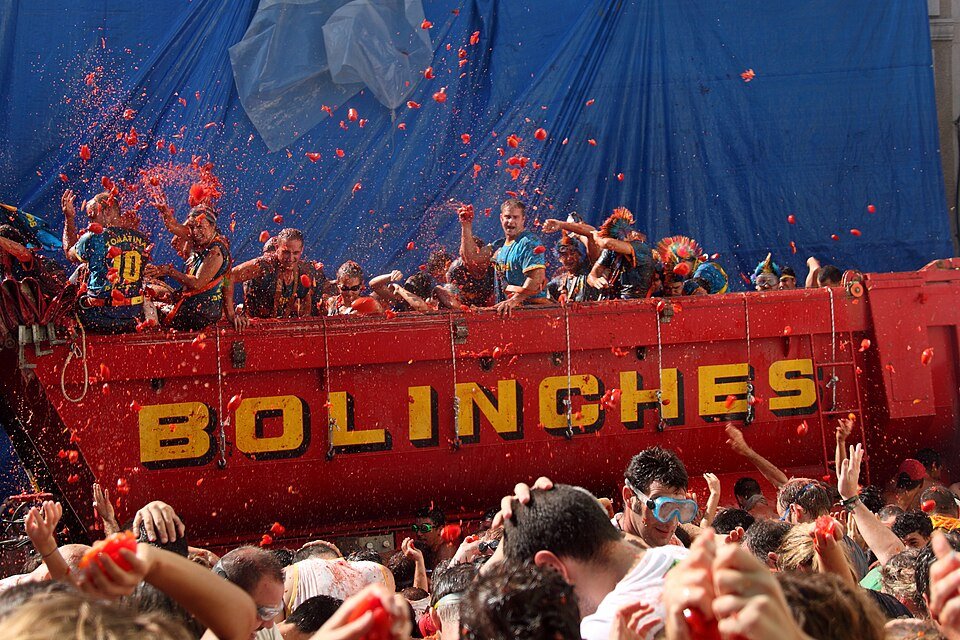
Held annually on the last Wednesday of August in Buñol, Spain’s La Tomatina is one of the most famous food fights in the world. Tens of thousands of participants gather in the streets to throw overripe tomatoes at one another for a full hour.
The tradition began in 1945 when a group of young people started a spontaneous food fight during a parade. It became so popular that the town eventually made it an official event. Trucks bring in tons of tomatoes, and after the hour-long battle, the streets turn red and slippery with pulp. The local fire department then hoses everything down, including the participants.
2. South Korea – Pepero Day

In South Korea, November 11 is Pepero Day, a holiday dedicated to exchanging chocolate-covered biscuit sticks called Pepero (similar to Pocky). The date 11/11 was chosen because the numbers resemble four Pepero sticks lined up together.
The holiday began as a marketing idea in the 1990s but quickly became a nationwide cultural phenomenon. Friends, couples, and even co-workers exchange Pepero sticks as a gesture of affection or friendship.
3. India – Holi (The Festival of Colors)
Holi, celebrated in March across India, is one of the world’s most colorful and joyous holidays. It marks the victory of good over evil and the arrival of spring.
What makes Holi unusual for first-time observers is the way it’s celebrated. People gather in the streets to throw brightly colored powders and splash colored water on each other. Age, status, and social boundaries disappear as everyone joins the fun.
Beyond the colors, Holi also includes singing, dancing, and sharing sweets. The day before the main event, bonfires called Holika Dahan are lit to symbolize the burning away of evil spirits.
4. Thailand – Songkran (Water Festival)

Songkran, Thailand’s New Year festival, takes place every April and is one of the wettest holidays in the world. Traditionally, people would sprinkle water on Buddha statues and elders’ hands to symbolize purification and blessing. However, the celebration evolved into massive water fights across cities and villages over the years.
For three days, locals and tourists arm themselves with buckets, water guns, and hoses, soaking everyone in sight. Streets in Bangkok, Chiang Mai, and Phuket become playful battlegrounds filled with laughter and cheer.
5. Japan – Kanamara Matsuri (Festival of the Steel Phallus)
Every April, the Japanese city of Kawasaki hosts one of the world’s most eyebrow-raising festivals—Kanamara Matsuri, also known as the Festival of the Steel Phallus. The celebration is centered around a large, pink, steel phallus paraded through the streets.
The origins of the festival trace back to the Edo period, when local prostitutes prayed to a shrine for protection against sexually transmitted diseases. Today, the festival raises awareness for sexual health, safe practices, and fertility.
6. Switzerland – Sechseläuten

Zurich’s Sechseläuten (pronounced “Zeks-uh-loy-ten”) is one of Switzerland’s most unusual holidays. It takes place in April to mark the end of winter and the arrival of spring.
The festival’s main highlight is burning a large snowman-like figure called the “Böögg.” It is stuffed with explosives, and when it’s set on fire, the crowd waits for its head to explode. According to local belief, the faster the explosion, the better the summer weather will be.
7. Bolivia – Day of the Skulls (Día de las Ñatitas)
In Bolivia, the Day of the Skulls is celebrated every November, just a few days after All Saints’ Day. On this day, people take human skulls (called Ñatitas) from their homes, decorate them with flowers, hats, and cigarettes, and bring them to cemeteries or churches for blessings.
The skulls are believed to protect their owners, bring good luck, and watch over their families. Each skull often has a personal story or connection, sometimes passed down through generations.
8. Nepal – Kukur Tihar (Day of the Dogs)
During the Hindu festival of Tihar in Nepal, there’s a special day dedicated entirely to honoring dogs. Known as Kukur Tihar, it celebrates dogs for their loyalty, companionship, and role as guardians.
On this day, both pet and stray dogs are decorated with flower garlands, red tika (a mark on the forehead), and offered delicious food. The holiday recognizes dogs as sacred messengers of the god Yama, the deity of death.
9. Colombia – Day of the Little Candles (Día de las Velitas)
In Colombia, December 7 marks the Day of the Little Candles. This dazzling and deeply meaningful holiday signals the start of the Christmas season. On this night, people light small candles and lanterns outside their homes, balconies, and along streets to honor the Virgin Mary.
Entire neighborhoods glow with candlelight, creating one of the most magical sights in South America. Families gather outdoors to eat, talk, and watch fireworks.
10. Sweden – Day of the Crayfish (Kräftskiva)

Every August, Swedes hold Kräftskiva, or Crayfish Party Day—a lively end-of-summer celebration dedicated to eating crayfish and drinking schnapps. Tables are decorated with lanterns, party hats, and bibs featuring cartoon crayfish.
What makes it unusual is the noisy singing that accompanies every drink. Swedes belt out traditional drinking songs before downing shots of aquavit, creating a cheerful and festive atmosphere.
Kräftskiva is one of Sweden’s quirkiest and most beloved traditions, combining good food, laughter, and plenty of music.