
Every animal has its unique set of abilities that help it survive. For instance, cheetahs are super-fast, some snakes are highly venomous, and elephants are extremely strong. However, there is a select group of animals that are equipped with rare abilities, which somehow appear to be superpowers. Below is a list of animals with some of the strangest and mind-blowing superpowers.
1. Thorny Devil Lizards with Two Heads

To survive in the desert, Thorny Devil Lizards have two heads. The actual head has all the expected organs, like eyes and mouth. On top of the real head is a false head used to distract and confuse prey. Besides this remarkable superpower, Thorny Devil Lizards also drink water with their feet. They achieve this through the tiny grooves on their body that run all the way to the mouth.
2. Body Regeneration in Salamanders
When a salamander loses a body part to a predator, stem cells form over the wound, and the regeneration process starts within 24 hours. If it was the leg, muscles, and bones begin to develop, followed by nerves and toes. A new leg grows back in less than three months, and the salamander continues to live its usual life. Scientists have observed that this superpower is caused by a salamander’s cells’ ability to return to stem cell status.
3. Quills on a Porcupine

Porcupines have quills from the eyebrows to the tail tip to protect themselves from prey. When intimidated, these quills, about 30,000 in a single porcupine, stand up straight and firm. The tips are super sharp and can be used to puncture into prey. The most interesting thing about this superpower is that the quills on a porcupine are designed to penetrate the skin easily but are super difficult to pull out.
4. The Armor on Pangolins

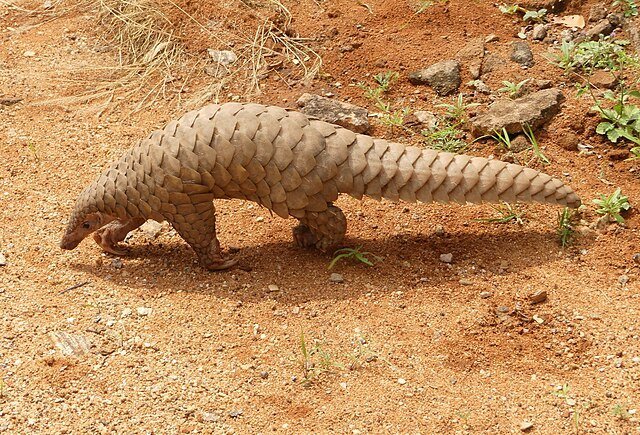
Even though they are mostly mistaken for reptiles because of their shape, pangolins are mammals, and their superpower lies in their skin. Pangolins are covered by a scaly armor that even lions can’t bite through. These scales are made from keratin, the same compound used to make fingernails in human beings. As if that’s not exciting enough, pangolins roll up into a ball when threatened, making them uneatable. Apart from the scaly armor, pangolins can also strike predators with their tails.
5. Elephant’s Ability to Predict Earthquakes
In the Savanna, Elephants have the ability to hear low-frequency sounds, which they use for communication. It’s thanks to this superpower that Elephants were able to survive the earthquake that occurred in the Indian Ocean in 2004. They used the superpower to predict the noise of the waves in the ground.
6. Super-Fast Camouflage in Indian Chameleons

Chameleons are known for their ability to camouflage. However, Indian Chameleons are unique because they can change color much faster. This adaptation serves two purposes: communicating with other chameleons and regulating body temperature. When it’s cold, darker colors absorb more heat. Another unique superpower of the Indian Chameleon is its tongue, which can catch insects several feet away.
7. Body Inflation of the Porcupine Fish

As you’ll observe with most of these animal superpowers, they come in handy in deterring prey. A porcupine fish is relatively small in its natural state. However, in times of danger, it can swallow air or water and inflate its body to at least two times its size. As this happens, the porcupines spread outwards, making them undesirable to predators. The goal of a porcupine fish body inflation is to make itself appear too big for predators with smaller mouths.
8. The Imitation of the False Coral Snake

In North and Middle America, there exists a false coral snake species. The use of “false” comes from the snake’s ability to imitate the appearance of its venomous cousins. However, false coral snakes are not poisonous. They imitate their relatives so that they can appear dangerous and deter prey.
9. Superior Sense of Smell in Dogs
Dogs have the superpower to smell odors a thousand to ten thousand times better than humans. That’s because their noses have between 100 to 300 million olfactory receptors. Human beings only have 6 million olfactory receptors. The other factor contributing to a dog’s superior sense of smell is their well-oiled nose.
10. Skilled Diving in Weddell Seals
Contrary to popular opinion, Weddell Seals can’t breathe underwater. Like all mammals, they only breathe air. However, how can Weddell Seals dive into the water for more than an hour? Apparently, the creatures have unique muscles that store more oxygen than hemoglobin. They are also good at finding air pockets in ice.
11. Insomnia in Bullfrogs, Sharks and Dolphins
Sleep is essential for all animals. However, some share a different opinion. The likes of bullfrogs, sharks, and dolphins do not sleep for months. Bullfrogs, for instance, are always on high alert, even when resting. Also, some shark species need to keep swimming to breathe, so sleep is out of the equation. Alpine Swifts have adapted to sleeping with only half of their brain at a time. Other animals, such as giraffes, worker ants, and sea urchins, do not sleep.