

The universe is full of paradoxes and contradictions. Most of us still can’t even grasp its infinite size. But often what appears to be impossible comes down to an absence of data—or incorrect assumptions and models.
To prove it, here are eight seriously old things (starting on Earth, then moving out to space) that once defied—and in some cases still defy—our understanding of the timeline of the cosmos.
8. Two billion-year-old impact craters

The oldest impact craters on Earth are billions of years old. But how? Given the huge geological upheavals in that time, we’d expect there to be nothing left. Even the continents are not where they were, or anything like the same shape.
Still, the Vredefort crater in South Africa remains identifiable in spite of its two billion years. Part of this has to do with its size. It’s the largest impact structure on Earth, with a diameter of up to 300 kilometers in places. Also, because of the scale of the impact, the crater was buried under a layer of ejecta, protecting what’s left from erosion.
Older still is the Yarrabubba impact structure, which formed in Australia 2.23 billion years ago—an impact that helped end an ice age. Though identifiable today mostly through mineral analyses, it continues to serve as a time capsule for scientists, providing insights into Earth’s early history.
7. Minerals older than Earth’s crust
As mentioned, the surface, or crust, of our planet has been continually transforming over billions of years. Continental drift, which split the supercontinent Pangaea into the continents we live on today, is only part of the story. Earth’s crust has also been shaped by volcanic eruptions and asteroids, especially during the Hadean eon 4.6-4 billion years ago. During this period—spanning the formation of the planet and the emergence of life—Earth was “a fiery hellscape”. “Under constant meteoric assault”, it was “replete with volcanoes gurgling lava at the surface”. As a result, there’s no geological record; the rock has all been destroyed and recycled over and over again.
Even so, in 2001, researchers dated a sample of zircon to 4.4 billion years ago—when the Hadean was in full swing. Discovered in Western Australia’s Jack Hills region, these crystals not only survived bombardment from space but also the intense heat and pressures of terrestrial recycling. But how? They’re not as hard as diamonds, and their melting point is much lower (2,500 °C as opposed to 4,500 °C).
In truth, there are probably diamonds as old in the region the zircons were discovered—although the oldest found yet are just 4.25 billion. The older, rarer zircon crystals are therefore a more valuable time capsule. They give us insights into Earth’s earliest history. We’ve learned, for example, that liquid water may have been present as early as 4.3 billion years ago. This could mean the Hadean was much cooler, and possibly more life-supporting, than we thought.
6. Prehistoric sunlight
We all know that looking at the stars is looking at the past. That by the time it gets here, the light hitting our eyes is as many years old as the star is light-years away. So when we look at our Sun’s closest neighbour, the Alpha Centauri system, which lies at a distance of roughly four light-years, we’re seeing what it looked like four years ago. That’s when the light now reaching our eyes originally left the star’s surface. Likewise, the yellow hypergiant Rho Cassiopeiae, the furthest visible star, lying 8,150 light-years away, appears to us today as it looked up close more than eight millennia ago—2,000 years before Earth’s first civilization.
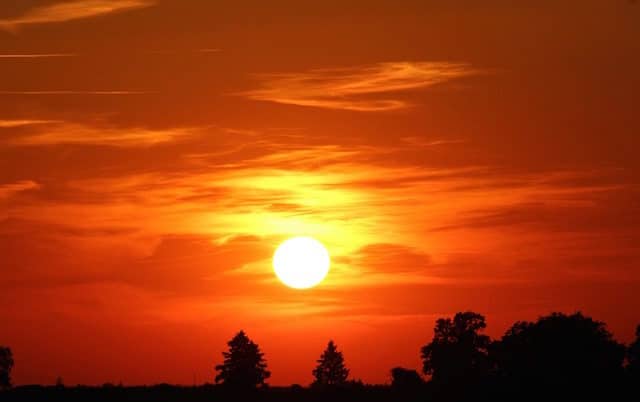
How is it then that the light from our own Sun, whose distance is measured in light-minutes, can be 10,000 years old when it gets here?
The answer has to do with solar density. Despite travelling at the speed of light, photons take a really long time to escape the Sun. Starting at the core, they take a meandering journey through 695,508 kilometers of dense solar material. Some reach the surface in 10,000 years, while the slowest can take 170,000—in which case we’re seeing light that was generated when humans first put on clothes. When the photons reach the Sun’s surface, however, they take a mere 8 minutes and 20 seconds to cross the 150 million kilometers of open space to our eyes.
5. The moon that predates its planet

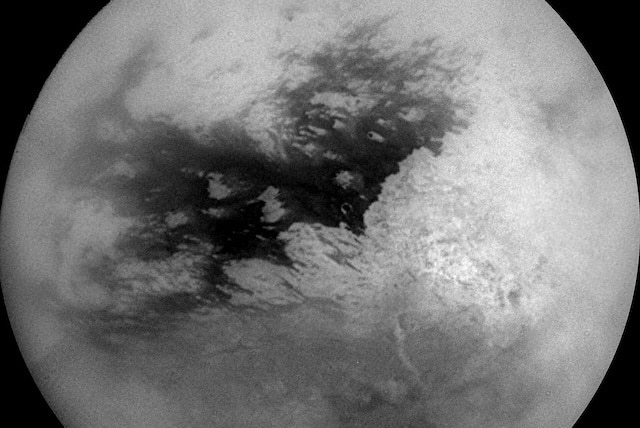
After Jupiter’s Ganymede, Titan is the second-largest moon in the Solar System. It’s actually bigger than Mercury. Also, unlike most moons, it has a substantial atmosphere—opaque, orange, and denser than Earth’s. Its formation has long been a mystery. But Titan’s nitrogen-rich atmosphere is now thought to have originated somewhere in the Oort cloud—that is, the icy shell of the Solar System. In other words, it didn’t form like Saturn’s other moons from the rings around its host planet.
As it turns out, analyses of Titan’s nitrogen isotope ratio do in fact suggest that it’s considerably older than Saturn, and possibly even the Solar System. According to researchers, it actually has more in common with Oort cloud comets than it does with other moons or planets. That makes Titan the only moon we know of that predates the planet it orbits.
4. The cosmic megastructure that’s almost as old as the universe
Cosmic megastructures, from voids to superclusters, are the largest known structures in the universe. Examples include the Giant Arc (a 3.3-billion-light-year string of galaxies), the Big Ring (a 4-billion-light-year circle of galaxies), and the Hercules-Corona Borealis Great Wall (a 10-billion-light-year gamma-ray burst cluster of galaxies). There’s also the Boötes Void, or Great Nothing—a spherical expanse of mostly empty, starless space 330 million light-years across. Each of these challenges our models of the cosmos. The Boötes Void should be teeming with thousands of galaxies, for example, not just its meager 60. And the others defy the Cosmological Principle, which limits their possible size to just 1.2 billion light-years.
Still, these megastructures are unlikely to have formed by chance—suggesting the problem lies with our laws and theories, not with the universe itself.
But there’s one megastructure that defies something more fundamental. The supercluster Hyperion is impossibly vast for its age. Galaxies first have to form, grow, and collide with others before clusters can merge into superclusters—all of which takes many billions of years. Yet, Hyperion was well established less than two billion years after the universe began. Observed from our distance of 12 billion light-years (so as it looked 12 billion years ago), Hyperion measures 200 million light-years across and 500 million light-years in length. That’s twice the width of our own Milky Way and 5,000 times its mass—not bad for a structure that appeared in the blink of an eye.
3. The matter that’s older than the universe
Although invisible, dark matter is thought to make up 85% of the cosmos. It’s essentially the glue that holds it all together. We don’t know what it is, but we know that it exists; if it didn’t, we wouldn’t have galaxies. The speed at which they spin would have torn them apart billions of years ago.
We can also observe the gravitational influence of dark matter in action by looking at a galaxy’s outer edge, where, despite their relative distance, stars orbit the core at the same speed as those further in. This isn’t what we’d expect if the gravity in a galaxy came mainly from its constituent stars, which are most densely packed together at the core. It’s strange, then, given its importance, that we know so little about dark matter. We don’t even know how old it is—but some think it’s older than the universe.
For one thing, current theories suggest the Big Bang that kicked off the material universe followed a period of inflation—of quantum forces, in just the tiniest fraction of a second, expanding nothing to unthinkable proportions. Dark matter is thought to have come from this process, followed much later by normal matter and radiation from the decay of quantum forces.
Another reason to think dark matter is older than the universe is that it appears to last forever. Researchers looking for evidence of its destruction through interaction with normal matter or radiation have found nothing, which suggests either that it’s too basic to break down into anything else or that it doesn’t interact efficiently enough to decay. Either way, given we haven’t seen signs of dark matter dying, its lifetime is assumed to be no less than one hundred quadrillion years—almost 10 million times more than the universe has so far existed.
2. The star that’s older than the universe
HD140283, which lies 190.1 light-years from Earth, in the constellation Libra, is the oldest star in the universe. Nicknamed Methuselah (after the oldest man in the Bible), it was initially estimated to be 16 billion years old. However, this was an estimated 2.2 billion years older than the universe. Scientists were baffled.
And while later investigations, 13 years after its discovery in 2000, dated the birth of the Methuselah star to 14.5 billion years ago, then 14.3 billion, it still didn’t make sense to astronomers. After all, the universe is thought to be just 13.8 billion years old based on analyses of the cosmic microwave background. How could a star be older?
Another eight years passed with scientists scratching their heads until, in 2021, the star’s age was revised to 12 billion years. But this still didn’t quite solve the paradox, as some were now saying the universe is younger than we think. New measurements of cosmic radiation lowered the possible age of the universe to 11.4 billion years—600 million years younger than the conservatively re-aged Methuselah.
One explanation for this paradox has to do with time variation in dark energy, affecting the rate at which the expansion of the universe accelerates. Whatever the reason, one thing is clear: Solving the Methuselah paradox is key to our understanding of the cosmos.
1. Black holes older than the universe
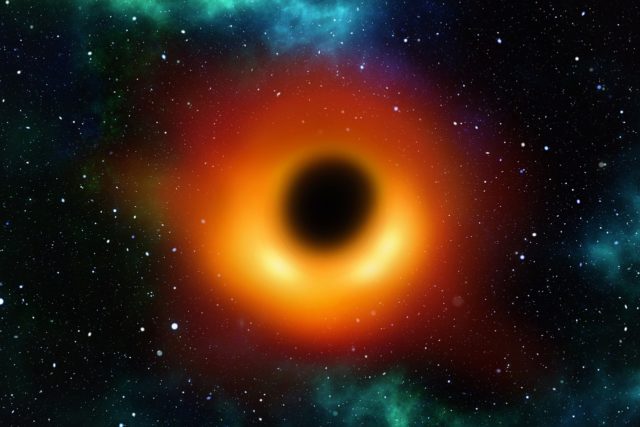
Primordial black holes may be as old as the universe, dating back to the Big Bang 13.8 billion years ago. And some, say theorists who back the Big Bounce, may actually be even older. Basically, the Big Bounce theory suggests our universe emerged from the collapse of one before it. Of course, all traces of that universe would have been destroyed—except, perhaps, for black holes.
We know, for example, that supermassive black holes (1 million to 10 billion times the mass of our sun) existed far earlier than we’d expect for their size. There just wasn’t enough time for the first stars to get born and die, and for the black holes left behind (with masses only a few times that of the sun) to grow to supermassive status.
It’s also assumed that in a pre-Big Bounce collapse, black holes wouldn’t merge with the densely packed matter but instead would remain apart as bubbles—albeit much smaller than they were. Hence, some believe the impossibly supermassive black holes in our universe may have been seeded by black holes from a universe before.
Other Articles you Might Like