

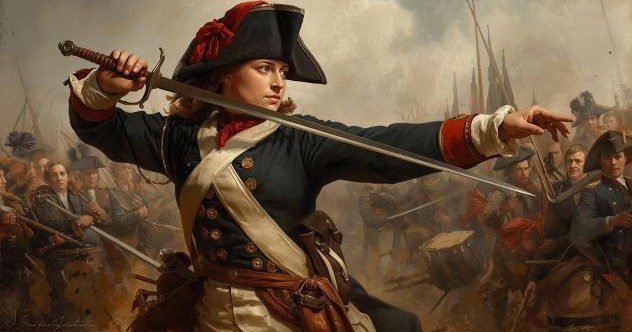
Throughout history, the battlefield was considered a man’s domain where women were forbidden to participate in combat. Despite these rigid social barriers, many brave women refused to stay behind while their countries went to war. They cropped their hair, donned men’s uniforms, and adopted masculine aliases to serve on the front lines. These warriors faced the double threat of enemy fire and the constant fear of being discovered by their own comrades. Their motivations ranged from intense patriotism and a desire for adventure to simple economic necessity during desperate times.
This list honors the incredible stories of women who successfully deceived entire armies to prove their valor in battle.
Related: Top 10 Amazing Women of the Crusades
10 Sarah Rosetta Wakeman
Sarah Rosetta Wakeman was a young woman from New York who decided to enlist in the Union Army during the American Civil War. Using the alias Lyons Wakeman, she joined the 153rd New York State Volunteers in 1862. Her primary motivation was financial, as the bounty for enlisting and the steady soldiers’ pay offered her a way to support her impoverished family back home. She successfully maintained her disguise for the duration of her service, performing the same grueling duties as any other male infantryman.
During her time in the Army, Wakeman saw significant combat action, most notably during the Red River Campaign in Louisiana. She wrote frequent letters to her family detailing her experiences and expressing pride in her ability to perform her duties. Interestingly, her letters suggest that she found a sense of freedom in her male persona that was unavailable to her as a woman in mid-19th-century society. She was never discovered by her fellow soldiers or her commanding officers during her military career.
Tragically, Wakeman did not fall to an enemy bullet but to the most common killer of the Civil War: chronic dysentery. She died in a hospital in New Orleans in 1864 and was buried under her male alias in Chalmette National Cemetery. It was only years later, when her family shared her private letters, that her true identity was revealed to the public. Her story remains one of the best documented cases of a woman serving in the Civil War because her correspondence survived intact.[1]
9 Maria Quitéria
Maria Quitéria is celebrated as a national hero in Brazil for her role in the War of Independence against Portugal. When the call for volunteers went out in 1822, her father forbade her from joining. Undeterred, Quitéria fled her home, cut her hair, and borrowed her brother-in-law’s uniform to enlist in a battalion of volunteers. She adopted the name Medeiros and quickly proved to be a natural soldier with exceptional skill in marksmanship.
Her father eventually tracked her down and revealed her true identity to her commanding officer. However, because of her superior discipline and skill with a rifle, the Major refused to discharge her. He allowed her to stay in the ranks and even permitted her to modify her uniform with a skirt to distinguish her as a female soldier after her secret was out. She became a symbol of resistance and a source of immense morale for the Brazilian troops fighting for their freedom.
Quitéria saw combat in several engagements, including operations around the Siege of Salvador during the struggle for independence. After the war, she was personally decorated by Emperor Pedro I and given the rank of Lieutenant. Her legacy is so enduring that she is considered the patron of the Brazilian Army’s Corps of Support Officers. She proved that a woman’s place was wherever the fight for liberty was happening.[2]
8 Deborah Sampson
Deborah Sampson was a weaver and schoolteacher who decided to join the Continental Army during the American Revolutionary War. In 1782, she donned a man’s uniform and enlisted under the name Robert Shurtleff. She was a tall woman for the time, which helped her blend in with the other recruits. She served in the 4th Massachusetts Regiment and was quickly recognized for her bravery and physical stamina during dangerous scouting missions.
Sampson was wounded twice during her service, but she went to extreme lengths to prevent her secret from being discovered. During a skirmish near Tarrytown, she took two musket balls to her thigh. Fearing that a doctor would discover her gender, she pulled one of the balls out herself using a penknife and a needle. She was unable to reach the second ball, and it remained in her leg for the rest of her life, a permanent reminder of her dedication to the cause of independence.
Her secret was finally revealed when she fell ill with a fever in Philadelphia and was treated by a physician named Barnabas Binney. Instead of turning her in, Binney took her to his home to recover and eventually informed her commanding officer of the situation. Sampson was honorably discharged in 1783. Years later, she became one of the first female professional lecturers in America, traveling to tell her story and successfully petitioning the government for a soldier’s pension with the help of Paul Revere.[3]
7 Nadezhda Durova
Nadezhda Durova was the daughter of a Russian hussar officer and grew up in the atmosphere of the military. She felt stifled by the traditional expectations of a noblewoman in the early 19th century. In 1806, she disguised herself as a boy and joined a cavalry regiment under the name Alexander Alexandrov. Her ability to ride horses and her comfort with weapons allowed her to pass as a young nobleman with ease.
She fought with great distinction in the Napoleonic Wars, participating in the battles of Guttstadt, Heilsberg, and Friedland. Her secret was eventually discovered by Tsar Alexander I after her father wrote to him begging to find his daughter. Impressed by her bravery and dedication to the army, the Tsar did not punish her. Instead, he awarded her the Cross of St. George and allowed her to continue serving as a commissioned officer.
Durova continued to fight for Russia during the French invasion of 1812 and the subsequent campaigns in Europe. She retired from the military in 1816 and later became a successful writer. Her memoirs, encouraged by the poet Alexander Pushkin, provide a fascinating look at the life of a cavalry officer through a unique perspective. She spent the rest of her life wearing men’s clothing and insisting on being addressed by her male name.[4]
6 Cathay Williams
Cathay Williams made history as the only documented African American woman known to have served in the United States Army as a Buffalo Soldier. Born into slavery in Missouri, she was forced to work as a cook for the Union Army during the Civil War. After the war ended, she needed a way to support herself and gain independence. In 1866, she disguised herself as a man and enlisted in the 38th U.S. Infantry, one of the famous Buffalo Soldier regiments, under the name William Cathay.
The medical examinations at the time were not particularly thorough, allowing Williams to pass without suspicion. She served for nearly two years at various posts in the American West, performing duties such as guard duty and patrolling the frontier. She was frequently hospitalized for various ailments, yet her secret remained safe for quite some time.
Her true gender was only discovered in 1868 when a post surgeon finally gave her a comprehensive examination. She was immediately given a disability discharge, ending her military career. Williams later attempted to claim a soldier’s pension, but her request was denied. Despite the lack of official recognition in her lifetime, she remains a legendary figure for her courage in breaking both racial and gender barriers in the military.[5]
5 Joanna Żubr
Joanna Żubr was a Polish woman who fought in the Napoleonic Wars after disguising herself as a man to enlist in the Polish army. Born in 1782, she joined the military under the male identity Michał Żubr. She served during the period when Polish forces were fighting alongside Napoleon in hopes of restoring Polish independence.
Żubr proved herself to be a capable and courageous soldier in combat. Her bravery during several engagements earned her the respect of fellow troops, who believed they were serving alongside a male comrade.
Her identity was eventually revealed after her military career had already earned admiration from her superiors. Instead of punishment, she was awarded the Virtuti Militari, Poland’s highest military decoration for valor.
After leaving the army she married another veteran and lived a quieter life, but her remarkable service ensured her place in Polish military history.[6]
4 Hannah Snell
Hannah Snell was an 18th-century British woman who embarked on a military career after her husband abandoned her while she was pregnant. After her child died in infancy, she set out to find her missing husband and decided to do so while disguised as a man. She adopted the name James Gray and joined the British Marines in 1747. She was eventually sent to India to fight during the War of the Austrian Succession.
During the Siege of Pondicherry, Snell was wounded multiple times, including a severe injury that she allegedly treated herself to avoid revealing her identity. Her toughness earned the respect of her fellow marines, who had no idea they were serving alongside a woman.
Snell finally revealed her secret to her shipmates in 1750. Rather than being punished, she became a minor celebrity, and the British government granted her an official pension in recognition of her military service.
She later opened a pub called The Widow in Masquerade and spent much of her later life telling stories of her adventures.[7]
3 Francesca Scanagatta
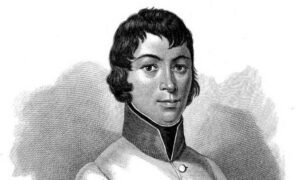
Francesca Scanagatta was an Italian woman who served in the Austrian Army during the Napoleonic Wars. Her journey began when her brother, who was scheduled to attend a prestigious military academy, fell ill and was unable to go. Seeing an opportunity to avoid a life in a convent, Francesca took his place. She disguised herself as a man and successfully graduated from the academy, eventually being commissioned as an officer.
Scanagatta served in several campaigns across Italy and Austria and was known for her discipline and bravery, particularly during the Siege of Genoa in 1800.
Her father eventually became concerned about her safety and revealed her identity to her superiors. Rather than facing punishment, she was allowed to resign her commission honorably and was granted a military pension.
She later married an army officer but always looked back on her unusual military career with pride.[8]
2 Malinda Blalock
Malinda Blalock joined the Confederate Army during the American Civil War to stay with her husband, Keith. Keith was a Union sympathizer living in North Carolina who was forced to enlist in the Confederate Army to avoid prison. Refusing to be separated from him, Malinda cut her hair, put on a uniform. She enlisted as his “brother,” Samuel Blalock. The two served side by side in the 26th North Carolina Infantry.
The couple fought in several skirmishes, with Malinda proving to be an able soldier who was always at her husband’s side. However, Keith soon realized that the Confederate cause was not one he could support and devised a plan to get discharged.
To stay with him, Malinda revealed to officers that she was a woman. The shocked officers discharged her from service, and the couple fled into the mountains of North Carolina, where they became pro-Union guerrilla fighters for the remainder of the war.[9]
1 Milunka Savić
Milunka Savić is widely regarded as one of the most decorated female combatants in modern military history. Her journey began in 1912 during the First Balkan War when her brother was called to mobilize. She took his place, disguised herself as a man, and joined the Serbian Army.
Her secret was revealed during the Second Balkan War after she was wounded by a grenade and treated in a hospital. When her commanding officer learned she was a woman, he offered to transfer her to a nursing unit. Savić refused and insisted on remaining a soldier.
She continued fighting throughout World War I and received numerous decorations from several countries, including France’s Legion of Honour.
Despite her international recognition, she lived a modest life in Belgrade after the war and was later remembered as one of Serbia’s greatest war heroes.[10]