

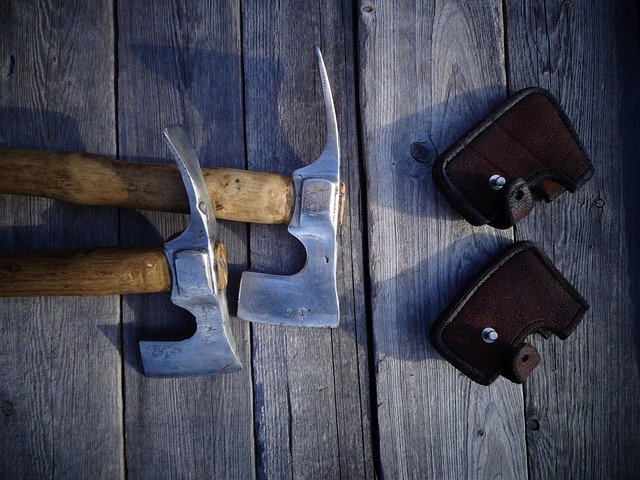
Armored combat appears chaotic to people who do not participate in buhurt axe, but experienced fighters understand that buhurt functions as a system engineering process which creates equipment validation requirements and safety checks for its complete combat events. HMB leagues such as Buhurt International and IMCF run regulated full-contact tournaments with strict equipment standards, controlled geometry, and safety verification.
The modern buhurt axe is not designed to cut. The axe functions as a tool which enables force transfer while creating positional changes and rhythm disruption. Historical sources from 14th-century fencing treatises to battlefield inventories show that poleaxes and long axes were favored against armored opponents because edge penetration mattered less than leverage and momentum. Archaeological finds from Viking Age Scandinavia to Central European knightly graves show axes used simultaneously by elite infantry formations.
The Buhurt Axe as Both Symbol and Sporting Tool
The choice of weapons in competitive armored combat determines how teams will execute their battle strategies. Teams divide roles between their players in ways that resemble current sports team arrangements which include shield controllers and disruptors and finishers and flank breakers. Axes serve as disruptors because their weight distribution enables them to produce stronger spinning movements during close combat situations.
The battle performance of Medieval Extreme’s lineup shows how small differences in engineering design affect their battlefield behavior.
- Buhurt Poleaxe with Shaft: Designed for structured team engagements, its reinforced steel lames hidden beneath the grip tape increase durability without compromising handling. At 120 cm and roughly 2080 g, it reflects historical poleaxe proportions optimized for leverage in clinches and wall pushes.
- Long Axe “Amnesia”: Built for heavy mass battles, this 125 cm axe emphasizes momentum generation. The hardened steel head and extended blade length allow controlled, high-energy strikes that disrupt shield lines common in 5v5 and 12v12 formats.
- Shiftaxe Type 1: A more technical interpretation focused on balance dynamics. Its forward-shifted center of mass increases strike acceleration while maintaining regulatory compliance, making it attractive to fighters prioritizing precision rather than raw weight.
Studies in sports biomechanics show that shifting mass even a few centimeters forward can increase angular momentum during rotational movements. That translates into faster opponent destabilization with fewer swings, conserving fighter stamina across multiple rounds.
Craftsmanship Behind a Trusted Axe
The development of trustworthy buhurt equipment needs to establish its base from three essential fields which include metallurgy and ergonomics and regulatory engineering. The design of competitive axes requires them to withstand multiple steel-on-steel collisions while maintaining protection for both fighters which differs from the purpose of historical replicas that exist only for display. The combination of hardened steel heads with flexible yet reinforced shafts creates a design which decreases the main safety risk that existed during early armored combat events two decades ago.
The current manufacturers of Medieval Extreme use the knowledge they acquired from observing thousands of competitive matches. The construction of reinforced hafts with riveted heads and controlled edge thickness meets international standards which demand blunt impact surfaces and predictable handling characteristics. The design choices exist to create functional benefits which protect a fighter’s arms from vibration transfer and create less fatigue and protect grip strength during extended grappling sequences.
The process of balance calibration holds equal value to its current requirements. Fighters report that their performance reaches its highest point during the first minute of intense melee but weapon fatigue becomes their main performance limiter. Properly engineered axes distribute force efficiently which enables fighters to maintain guard position for extended periods while they reduce unnecessary movements. The outcome produces combat events that protect competitors from harm while enabling them to display skills.
Why Iconic Gear Helps Grow the Sport’s Visibility
Buhurt requires recognition of its authentic equipment because this equipment proves essential for establishing its authenticity and professional image throughout its worldwide operations which include Europe, North America and Asia. Well-designed axes create visual elements that separate actual combat from historic reenactments and theatrical shows.
The selection of competition-grade equipment such as a buhurt axe demonstrates dedication to safety and skill development which enables teams to achieve superior performance and increased trustworthiness. The complete product selection at Medieval Extreme allows you to prepare for your upcoming battle with the latest combat equipment.