

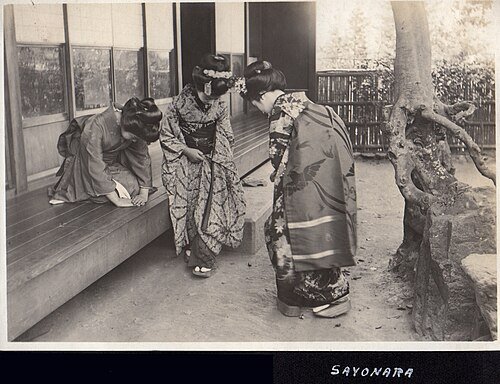
Japan is famous for its politeness, respect, and highly structured social customs. From bowing instead of shaking hands to removing your shoes before entering certain places, Japanese etiquette can sometimes seem complicated to outsiders.
However, some of the country’s social rules are much less obvious. There are specific ways to handle business cards, chopsticks, gifts, trains, and even money. Some seemingly harmless behaviors can also be considered rude in Japan. If you are planning to visit Japan or simply want to understand its culture better, here are some things you may not have known about Japanese etiquette.
1. Don’t Stick Your Chopsticks Upright in Rice

One of the biggest chopstick mistakes you can make in Japan is sticking your chopsticks vertically into a bowl of rice. This is strongly associated with Buddhist funeral rituals, where a bowl of rice with upright chopsticks is placed as an offering for the deceased.
Because of this association, doing it at a restaurant or someone’s home can create a very uncomfortable situation. Instead, place your chopsticks horizontally across the top of your bowl or use the small chopstick rest provided at the table.
2. Passing Food With Chopsticks Is Also Considered Bad
There is another chopstick rule that surprises many visitors. You should not use your chopsticks to pass food directly to another person’s chopsticks.
The reason is similar to the previous rule. During Japanese Buddhist funeral rituals, bones are passed between people using chopsticks after cremation. As a result, transferring food from chopsticks to chopsticks can remind people of this funeral practice.
If you want to share food, place it on the other person’s plate instead.
3. You Should Not Eat While Walking
Japan has countless convenience stores, food stalls, and vending machines, so visitors might assume that eating while walking is perfectly acceptable. However, eating while walking is generally discouraged in many Japanese settings.
The reasoning is partly connected to cleanliness and consideration for others. Food can spill, packaging can create litter, and crowded streets can make eating inconvenient for people around you.
There are exceptions, particularly at festivals and food markets where eating while standing or walking is more common. The important thing is to observe what people around you are doing.
4. Business Cards Are Treated With Respect
Exchanging business cards in Japan is more formal than simply handing someone a card.
When giving or receiving a business card, it is customary to use both hands and present the card so the other person can easily read it. After receiving it, you should take a moment to look at the card rather than immediately stuffing it into your pocket.
During a meeting, it can be appropriate to place the card neatly on the table in front of you. Folding, bending, writing on, or casually throwing someone’s business card into a bag can be interpreted as disrespectful.
5. Tipping Is Usually Not Expected
Visitors from countries where tipping is customary sometimes assume that they should leave money for restaurant servers, taxi drivers, or hotel staff in Japan. However, tipping is generally not part of everyday Japanese service culture.
In many situations, leaving extra money can actually create confusion. Excellent service is normally considered part of the job rather than something that requires an additional reward.
This does not mean Japanese workers do not appreciate gratitude. A sincere “arigatou gozaimasu,” meaning “thank you very much,” is often the more appropriate response.
6. Don’t Count Your Money in Front of Everyone
Handling money also comes with its own etiquette. In Japan, cash is still widely used, although electronic payments are increasingly common.
When paying, you may notice that cash is often placed on a small tray rather than directly into the cashier’s hand. This system allows transactions to happen neatly and avoids unnecessary touching.
You should also avoid dramatically counting or displaying large amounts of money in public. Like many cultures, Japan values discretion when handling personal finances.
7. Don’t Open Gifts Immediately Unless Invited
Gift-giving is an important part of Japanese culture, but the way gifts are handled can be different from what visitors are used to.
When someone gives you a present, it is generally polite to receive it respectfully and express gratitude. Depending on the situation, immediately ripping open the wrapping paper may not be appropriate unless the person encourages you to open it.
The wrapping itself can also be considered part of the gift. This is why Japanese gift wrapping is often exceptionally neat and elaborate.
8. Bowing Is More Complicated Than It Looks

Most people know that Japanese people bow to show respect, but there are different types of bows depending on the situation.
A casual bow can be used between friends or acquaintances, while deeper bows can communicate greater respect or seriousness. In formal business settings, the angle and duration of the bow can carry meaning.
Fortunately, foreigners are not generally expected to master every detail. If you are unsure, a respectful bow and a friendly greeting will usually go a long way.
9. Silence on Public Transport Is Considered Respectful
Japanese trains are famously efficient, but they are also known for being relatively quiet.
Talking loudly on trains can disturb other passengers, and phone conversations are generally discouraged. You may notice people using their phones to text, browse, or listen to music through headphones instead.
There are also designated priority seats for elderly passengers, pregnant people, people with disabilities, and others who may need them. Giving up your seat when appropriate is an important part of showing consideration.
10. Don’t Forget to Remove Your Shoes
Removing your shoes before entering certain homes and traditional establishments is more than simply a cleanliness rule.
In Japan, the entrance area of a home, known as the genkan, creates a clear boundary between the outside world and the clean interior. Shoes worn outdoors are therefore removed before entering.
The same rule may apply to traditional restaurants, temples, guesthouses, changing rooms, and other places. If you see a row of shoes near an entrance, that is usually a strong hint that you should take yours off too.