

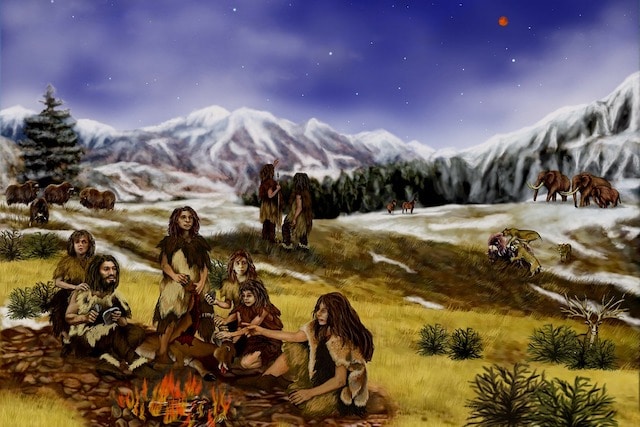
There’s a very good chance that if you are using a phone or a computer to enjoy this content right now, you are Homo sapiens. We are the only species of human wandering the Earth at the moment, but it wasn’t always that way.
Much like if you go looking for a new dog at a rescue and have trouble deciding between a pug, a Schnauzer, a doberman, and a greyhound, humans had quite the full kennel themselves. Our cousin species have all since died out, though some of their genetics live on and us. But it does make one Wonder, How many different kinds of humans were there back in the day? Let’s go back in time and have a look.
Are We Different Species?
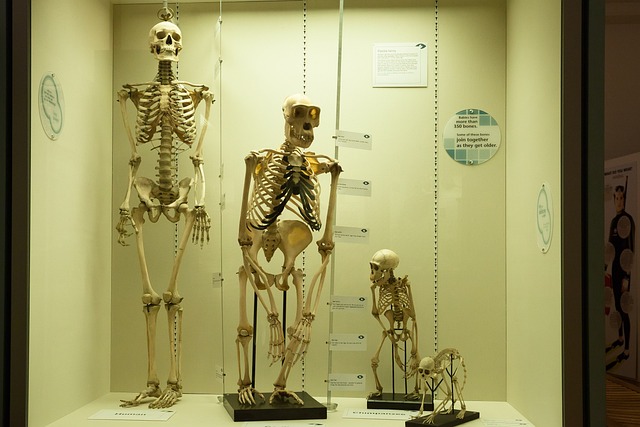
To start with, we can question whether or not we are actually a different species from the other humans that existed. On the surface, it seems like we must be. We are not Neanderthals, but we did breed with Neanderthals at some point because 2% of all non-African ancestry comes from Neanderthals. Right now, you and everyone you know are part Neanderthal. Melanesian people may have as much as 6% Denisovan DNA.
By some early definitions of species, different species are unable to reproduce and have fertile offspring. But obviously humans are pretty fertile, so we were not different from ancient humans by that definition. That said, some organisms reproduce asexually, so this breeding definition is too limiting, anyway. The result? We don’t technically have a fully settled definition of species.
Early Humans
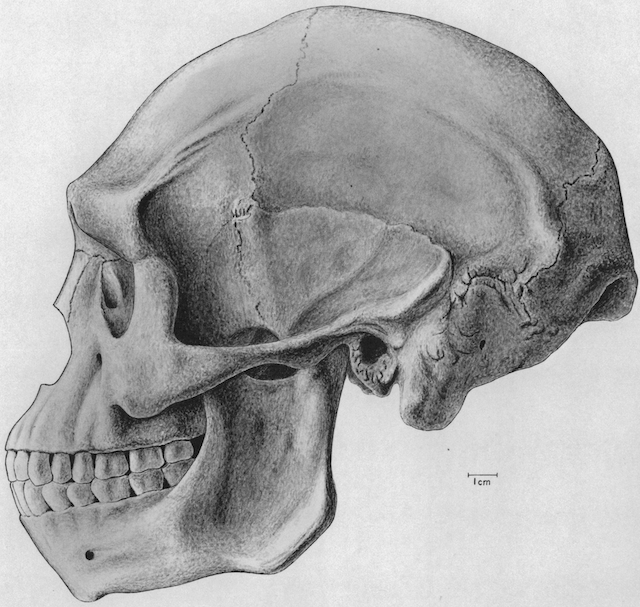
One important thing to know right off the bat when it comes to learning about early human species is that there’s not technically agreement across the scientific community about what that means.
There are at least eight species of early humans we can identify that lived alongside us. Still, sometimes that number is expanded considerably to include others for which there is less clear evidence that may have existed earlier. In addition to those that might not necessarily qualify as human and are more of a step between us and ape-like ancestors. By some accounts, there are as many as 20 species of humans, not including us. But even that list is missing members, like the Denisovans.
To appreciate some of the confusion, you can look at a species like Homo erectus. Homo erectus is our oldest relative who had human-like proportions. Alongside Neanderthals, these are arguably the most commonly depicted “caveman” tropes. They had longer legs and shorter arms, meaning they adapted to life on the ground, not in trees.
Homo erectus lived as far back as 1.89 million years ago and disappeared about 110,000 years ago. Homo sapiens, meaning us, first showed up between 200,000 and 300,000 years ago. So we spent a good deal of time sharing the Earth. But there may be more than one kind of homo erectus.
Sometimes homo erectus is divided further into homo ergaster and homo georgicus. Not everyone is 100% certain if these were the same species or different subspecies. What they potentially all did have in common was a larger skull size, meaning a larger brain.
Another notable feature of homo erectus was that they were the first early human species to expand beyond a single continent. Earlier fossil records were very limited in range, but Homo erectus fossils have been found in Africa, Asia, and Europe. This ancient human was a traveling man.
As we said, there are no less than 20 species of humans that science has identified, with some lists containing even more. Some of them looked close to human, while some of them were decidedly more ape-like in appearance. But all of them had to be unique enough to qualify as their own species before we could definitively separate them. At least for now.
In the future, who knows? More fossils may help us get a better idea of how our species and others came to be. In the meantime, let’s take a look at some of our ancient cousins who no longer exist.
Sahelanthropus

There’s a good chance you’ve never heard of Sahelanthropus, and not just because that word doesn’t really roll off the tongue very well. Sahelanthropus tchadensis lived in Africa somewhere between 6 and 7 million years ago.
If you were to see what a recreation of this early hominin looked like based on fossils, you would probably think it was an ape. One worthy distinction, however, is that they walked upright. Or at least some scientists think they did. Others are less convinced and think this is just another ape.
If this species did walk upright, then it may, in fact, be the oldest human ancestor we have ever discovered. The debate still rages among those who believe this species could walk upright, and those who are convinced that it was scrambling around on all fours like a chimp and that maybe it just walked upright sometimes, sort of like modern apes can, or even your dog when properly motivated. Without further evidence, it will remain the subject of debate.
Neanderthals
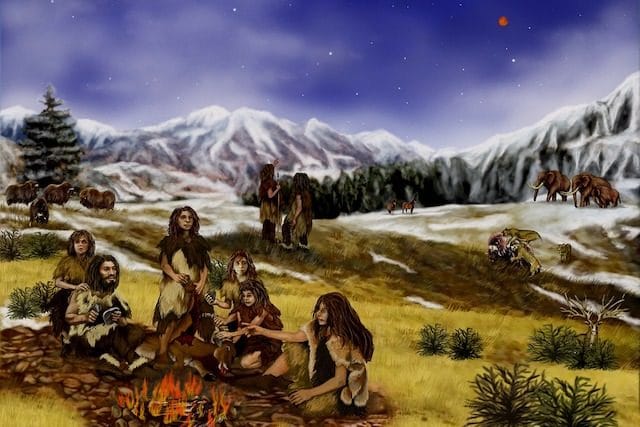
Neanderthals first emerged 400,000 years ago. Relatively speaking, they weren’t much older than Homo sapiens. And, like the other human species besides us, they died out around 40,000 years ago.
While Sahelanthropus would have been our most distant human relative, Neanderthals were our closest. Physically, they looked almost exactly like us. And, as genetics tells us, we could share some special moments and have little half Homo sapiens, half Neanderthal babies if we were so inclined.
Fossil evidence shows that Neanderthals traveled as far west as Wales, while they could be found in the far east of Siberia as well. They were adapted to live in colder climates than many other human species, and their bodies would have also been well-suited for sprinting. That is significant because not all of our ancestors were capable of doing that. Which means Neanderthals could have hunted much better than other species as well.
While the modern perception of cavemen, typically meaning Neanderthals, is like a stupider version of us, there’s plenty of evidence that Neanderthals were very intelligent. They may have even altered the landscape where they lived by burning and clear-cutting vegetation. They even refined their own tar to help make weapons for hunting.
We know a lot more about Neanderthals than some other species because of where they lived. Many fossil remains have been preserved in limestone caves, so we have a lot more information to go on when researching them than species that lived in warmer, open climates that were unable to preserve the remains and relics as well.
Neanderthals survived an ice age, developed tools, mastered hunting, and even sewing. Their disappearance, like those of every species, is still a mystery.
Flores Man

Flores Man, also known as Homo floresiensis, was a small species of human that would have existed between 50,000 and 100,000 years ago on the little island of Flores in Southeast Asia. And when we say small, we mean the remains of a female skeleton were 3-foot-6. That’s what gave it the nickname of Hobbit. There is speculation that the small size could be an example of island dwarfing, in which species evolve to be smaller due to limited resources in an island environment.
Because the remains that were discovered are limited, there’s only one mostly complete skeleton and a few partial pieces of others. There is still speculation about the nature of the Flores man. Some have speculated that this is not a separate species at all, just the remains of a few diseased humans that I’ve been mistaken for something else.
Denisovans

Denisovans are another species closely related to modern humans and interbred with both homo sapiens and Neanderthals. They are also a relatively new discovery, remains having been first identified in 2010.
Based on the evidence we have now, a common ancestor known as homo heidelbergensis left Africa between 300,000 and 400,000 years ago. Those who left split into two groups. One became Neanderthal, and one became Denisovan. Those that remained behind in Africa turned into homo sapiens. And that’s how the three of us are connected, and why our ancestors were able to reproduce between the three separate groups.
While Neanderthals are named after the Neander Valley in Germany, Denisovans are named after a Russian cave in which a dude named Denis used to live. That’s not even a joke; that’s the actual reason.
Denisovans ranged from the cold north of Siberia to the hot jungles of Southeast Asia. There have not been many Denisovan fossils identified, but we do have DNA from them, and that is how we have learned much of what we know. Based on that DNA evidence, there was little genetic diversity in the population. That means there might not have been many of them to begin with. However, their DNA has survived into the modern era, as we already mentioned.
While we already covered the Melanesians, it’s also believed that Sherpas in the Himalayan mountains can handle the high altitudes and low oxygen better than many other modern people because of the Denisovan DNA they have
Australopithecus

One of the most famous skeletons ever found, belonging to an ancient, potentially human relative, is named Lucy. She is from a species known as Australopithecus. Australopithecus lived in Africa, and Lucy specifically was found in Ethiopia.
We have found the remains of over 300 individuals, so we know a lot about them. We know they could walk upright, but they could also spend time in trees. We know their diet consisted mostly of plants based on the teeth that we’ve recovered, but they could also eat harder things and may have even eaten small lizards and things of that nature.
Although they bore some similarities to Homo Sapiens, physically, they would have looked much more like apes.
Where Did Everyone Else Go?

If Homo erectus existed for almost two million years, where did it go? Where did everyone except Homo sapiens go? By about 40,000 years ago, only Homo Sapien was left on the Earth, and all the other human species were gone. The truth is, we do not have one definitive answer.
It’s possible that Homo sapiens killed off their cousins. We might have gone to war with these other species of humans and wiped them out. But clearly, that wasn’t the only thing happening since we shared genetics. So, another theory is that we might have simply interbred some of them out of existence, and what we are now is the result of the co-mingling of all of us.
Other theories more convincingly suggest that changing climates became too much for the other species to survive, and they all died out. Or even that our species just had the better infant survival rate and lower rates of maternal mortality, and we were more equipped to stick it out long-term in a changing World.
It’s no wonder we have a hard time figuring out where everybody went; we don’t even know where they came from. We don’t even know where we came from. There is evidence of early Homo sapiens in Morocco, Ethiopia, and South Africa. We may have sprung up in all of those places around the same time.
All of what we know we have to glean from fossils, and they don’t always paint the clearest picture. The only thing we do know for sure is that we used to have some cousins, and they aren’t around anymore.
Other Articles you Might Like