

A century ago, the world was between the two world wars that would convulse the twentieth century. But 1926 was far from a year when nothing much was happening. Miami was pummeled by one of the deadliest hurricanes in American history. Britain’s General Strike brought the nation to a standstill. And Mexico was wracked by the lethally brutal Cristero War. On happier notes, an American became the first woman to swim across the English Channel; the first transatlantic phone call was made; and Marilyn Monroe was born.
Read on to get the lowdown on the happenings of 1926.
Related: 10 Decades-Old Cold Case Murders Solved with DNA
10 The Birth of Modern Rocketry
On March 16, 1926, Robert H. Goddard launched the world’s first successful liquid-fueled rocket from his aunt’s farm in Auburn, Massachusetts. The ungainly-looking contraption, powered by gasoline and liquid oxygen, stood about 10 feet (3 m) tall. Goddard’s wife, Esther, watched as he ignited the engine and the rocket slowly lifted into the sky.
The flight lasted only about 2.5 seconds. The rocket reached a height of 41 feet (12.5 m) before crashing into a nearby cabbage patch, 184 feet (56.1 m) from its launch site. Goddard later described the test as a modest success, noting that the rocket had risen under its own power and demonstrated that liquid fuel could work.
The brief flight nevertheless laid the groundwork for modern rocketry and eventually enabled space exploration. At the time, however, the achievement received little public attention. The New York Times even mocked Goddard’s ideas, later publishing a retraction in 1969 after the Apollo 11 mission demonstrated just how far his pioneering work had taken humanity.[1]
9 Gertrude Ederle Conquers the English Channel
Hardly a household name today, in the 1920s the swimmer Gertrude Ederle was one of America’s best-known athletes. She first came to prominence at the 1924 Paris Olympics, winning a gold medal as part of the U.S. 4 × 100-meter freestyle relay team and bronze medals in the 100- and 400-meter freestyle events. But it was her exploits in the English Channel, the formidable sea lane between France and Britain, that brought her even wider recognition.
In fact, her first attempt at crossing the Channel, or La Manche as the French call it, ended in failure. But undeterred, she returned for a second attempt in 1926. Her planned twenty-one-mile route started at Cape Gris-Nez on the French coast, with her finishing point in the English port of Dover. Slathered in sheep fat to protect against the cold, Ederle’s swim covered approximately thirty-five miles because of the fierce Channel currents. Not only did she complete the feat in fourteen hours and thirty-one minutes, but she also beat the previous men’s record by almost two hours.
On her return to the United States, Ederle was honored with a ticker-tape parade in New York and by the words of President Calvin Coolidge, who called her “America’s best girl.” [2]
8 Houdini Shuffles Off This Mortal Coil
Harry Houdini was famous for escaping from seemingly impossible situations. He was locked into water-filled milk cans, thrown—chained—from bridges, and tossed, bound in a packing crate, into the sea. These feats cemented his reputation as a man who could escape from any predicament.
But despite his toned physique, Houdini died in 1926 at the age of fifty-two. The story was that a student, J. Gordon Whitehead, approached Houdini and punched him hard in the stomach before a show at Montreal’s Princess Theatre. One of Houdini’s tricks was to take hard punches in the stomach without flinching. But Whitehead caught him unawares, and ten days later, on October 31, the great escapologist was dead.
However, that might be a good story, and it’s widely believed—but it’s contested. Houdini died from a ruptured appendix, the accepted medical explanation in the days before antibiotics. Some medical historians have argued that a blow to the stomach was unlikely to cause appendicitis. However, it might have worsened an existing condition. So Houdini’s death remains, like the man, an enigma.[3]
7 A Pilgrimage Ends in Tragedy
It was early on a Sunday morning in March 1926 when a train left the Costa Rican city of Heredia, bound for Cartago, the birthplace of Costa Rica’s patron saint, La Negrita. Father Claudio Volio had arranged this pilgrimage, which was also a charity fundraising event, with proceeds to go to a nursing home in Cartago. Apparently, many more tickets were sold than seats were available. As a result, the six-carriage train, reportedly designed to carry about 300 passengers, was swelled to an uncomfortably overcrowded 1,000.
The rail route to Cartago included a crossing of the Virilla River, with the line rising up an incline just after the bridge. As the driver approached the bridge, the train derailed. Accounts differ on whether excessive speed, the train’s enormous weight, a poorly secured rail, or the bridge’s curve was primarily responsible. Two carriages plunged approximately 190 feet into the river below, while a third crashed into the metal bridge supports.
The crash killed 385 men, women, and children and injured another ninety-three. An appalled Costa Rica was plunged into three days of nationwide mourning.[4]
6 The First Transatlantic Telephone Conversation
On March 7, 1926, the first successful telephone conversation bridged the Atlantic between the United States and Britain. In fact, that call—an experiment conducted by AT&T—came fifty years after Scottish inventor Alexander Graham Bell made the first telephone call using the device he had patented in 1876. On that occasion, Bell phoned his assistant and said, “Mr. Watson, come here—I want to see you.” Not exactly great poetry.
The Guardian reported that during the first experimental call, the most exciting thing said was the less-than-earth-shattering, “What’s the time with you?” Transatlantic calls first became available to the public on January 7, 1927, when AT&T president Walter S. Gifford, in New York, spoke with Sir Evelyn P. Murray, the secretary of the British General Post Office, in London. Their conversation was no more scintillating than that of other inaugural calls. Gifford asked Murray, “How’s the weather over in London?” As it happened, it was raining in London but sunny in New York.[5]
5 A Place to Get Your Kicks Is Born
The National Park Service tells us that U.S. Highway 66, popularly known as “Route 66,” was significant as an early highway linking Chicago to Los Angeles. Before it became a fully paved highway, Route 66 was a patchwork of existing roads, some of them unpaved. Although it was designated and named in 1926, it was not entirely paved until 1938.
In American culture, the century-old highway has far more significance than merely serving as a route from Chicago to Los Angeles. It’s become an enduring American cultural icon. Crooner Nat King Cole made one of the earliest and most famous recordings of the immortal “(Get Your Kicks on) Route 66” in 1946. Following in his footsteps came many more recordings of the classic number, including versions by Chuck Berry, the Rolling Stones, Tom Petty and the Heartbreakers, and Depeche Mode.
Notable movies set on Route 66 include Thelma & Louise, Pixar favorite Cars, and Little Miss Sunshine, with Alan Arkin’s memorable portrayal of a grandfather struggling with heroin addiction. John Steinbeck’s 1939 novel The Grapes of Wrath also featured the route, which the author dubbed the “Mother Road.” [6]
4 The Birth of a Queen, a Dictator, a Movie Star, and a Bear
The year 1926 was a vintage one when it came to notable births. Princess Elizabeth Alexandra Mary Windsor was born on April 21 in a house in London’s posh Mayfair district. Twenty-six years later, in 1952, she became Queen Elizabeth II. By the time she died in 2022, she had been the United Kingdom’s longest-reigning monarch.
Another famous figure born that year was Norma Jeane Mortenson, later known as Marilyn Monroe. It’s probably fair to say that Marilyn Monroe had little in common with her contemporary, Queen Elizabeth II.
Fidel Castro, who would later lead communist Cuba, was also born in 1926. Sir David Attenborough, who would go on to bring the natural world into millions of homes through the BBC, arrived that May. And jazz would be graced by the sublime trumpeting of Miles Davis, born in Alton, Illinois, on May 26.
And the bear? He was none other than Winnie-the-Pooh, A. A. Milne’s “Bear of Very Little Brain.” The first Winnie-the-Pooh book was published in October 1926.[7]
3 Mexico’s Deadly Cristero War Begins
In 1926, Mexico’s president, Plutarco Elías Calles, introduced measures to enforce constitutional restrictions on the Catholic Church’s political and institutional power. Catholicism had been deeply embedded in Mexican society since the Spanish conquest, and many Mexicans were devout. The Calles government sought to limit the influence wielded by the Church and its clergy. But the new restrictions were met with a concerted, often violent backlash. In turn, the Mexican government responded with severe repression.
Initially, Catholic opposition to the government measures took the form of peaceful protests, but the authorities ignored those. In July 1926, the Mexican bishops responded by suspending public worship, a move that further enraged Catholics who blamed the government. Some of the faithful took up arms and formed militias that fought fierce guerrilla battles with government troops.
This vicious civil war, marked by cruel atrocities on both sides, raged until 1929, when the Mexican government and Church representatives reached an uneasy peace agreement amid U.S. diplomatic pressure. By then, the estimated death toll was as high as 90,000, including combatants and civilians.[8]
2 Britain’s Bitter General Strike
In the spring of 1926, the owners of Britain’s massive coal-mining industry decided that their workers should work eight-hour shifts underground instead of seven. In what could hardly be described as a sweetener for the deal, the owners also proposed a 13% wage cut. Unsurprisingly, the miners forcefully rejected this double whammy of increased hours and reduced wages. The mine owners reacted by locking out their million-strong workforce.
The Trades Union Congress, representing workers across various industries, called on its members to take industrial action in support of the miners. The walkout, which began on May 3, became known as the General Strike. About 1.7 million workers heeded the call. Among other things, food distribution, transport, and newspaper printing presses were disrupted. Troops were deployed to protect essential deliveries, and disturbances and confrontations occurred in some cities.
The General Strike ended after nine days, although the miners continued their action for several more months. Ultimately, they returned to work under worsened conditions, including longer hours and reduced wages.[9]
1 The Great Miami Hurricane
Describing Miami in 1926, the National Weather Service writes that the city was “swelled with new residents; optimistic, speculative, and woefully under-educated about hurricanes.” The catastrophe that hit Miami that year was made worse by the city’s rapid population growth, inadequate building standards, weak warning systems, and the speculative Florida land boom.
When the hurricane began heading toward Miami, forecasting was far less sophisticated than today’s. The Weather Service could only guess where and when the storm would hit the mainland United States.
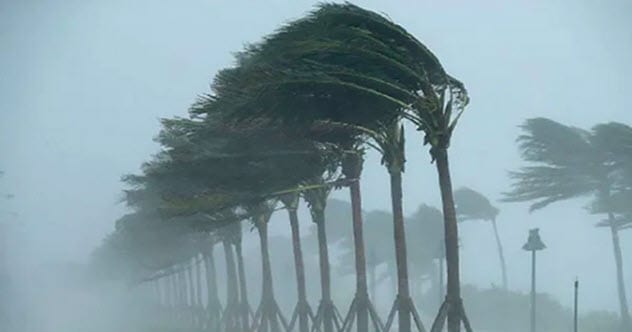
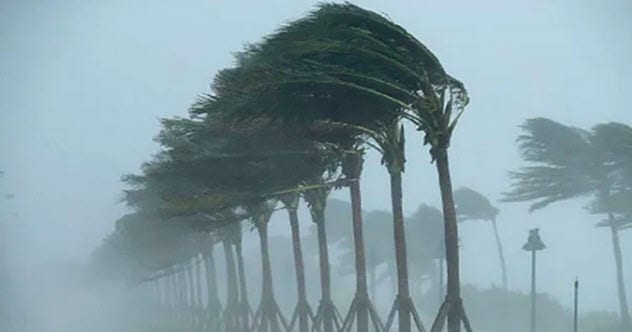
In the event, the first hurricane warning was issued late on September 17, with the eye of the Category 4 storm passing over Miami at approximately 6:30 a.m. the next morning. The eye of a storm is relatively calm, of course, and some locals thought the worst had passed and left shelter. Then the full force of the cyclone hit, with a ten-foot storm surge swamping the coastline and flowing into the city.
The hurricane resulted in 372 deaths, more than 6,000 injuries, and $105 million worth of damage in the dollars of the day. Given the much greater development now, catastrophe-modeling estimates suggest that a repeat of the 1926 hurricane could cause more than $200 billion in insured losses.[10]