

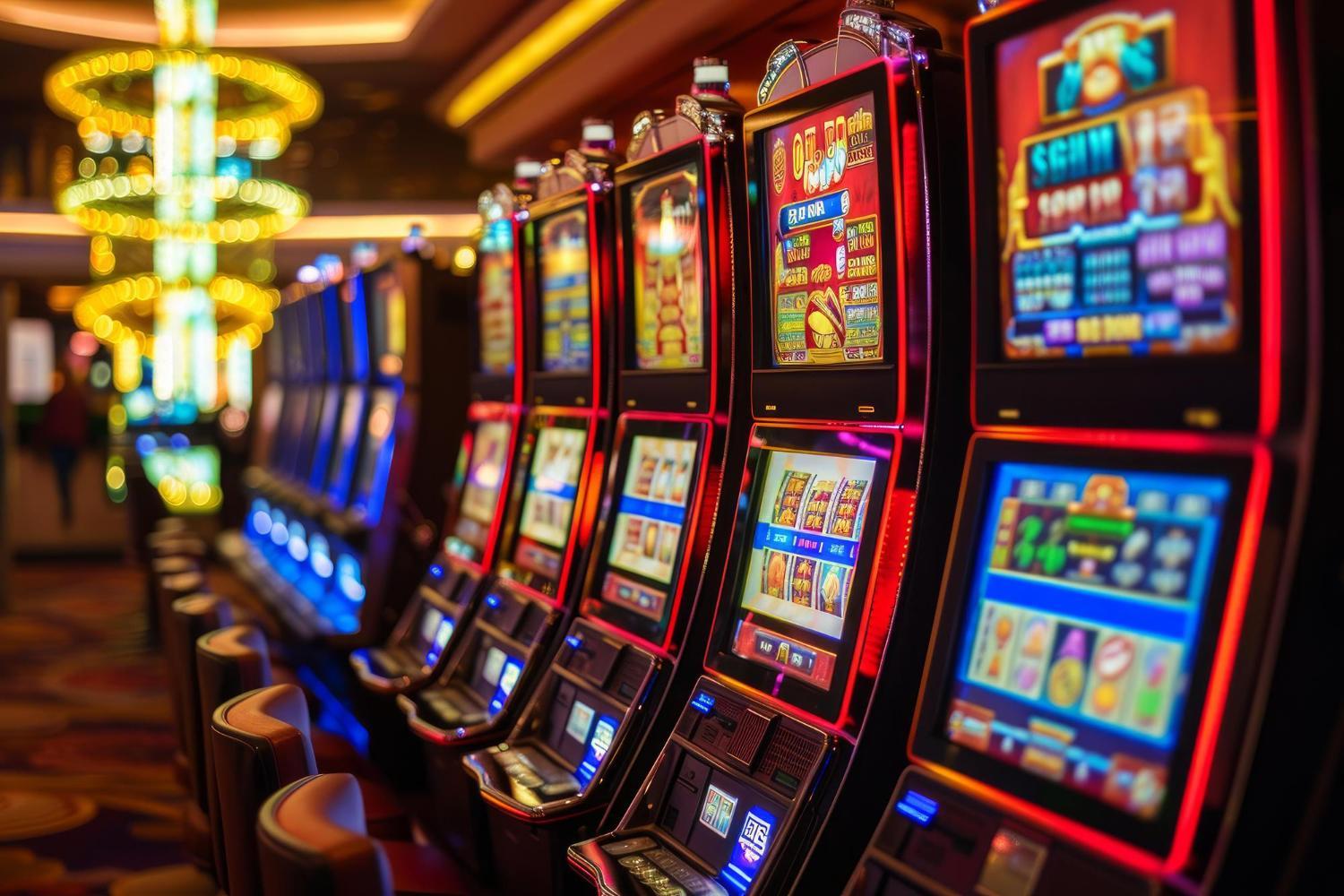
Slot machines are the most played casino games on the planet. They are also among the most misunderstood. Most people who pull a lever or tap a spin button have little idea about the strange history, the counterintuitive mathematics, or the bizarre laws that surround the machines they are playing. Here are 25 facts that change the way you look at slots.
Origins and Invention
1. The first slot machine was invented by a Bavarian immigrant who walked across Europe as a teenager.
Charles August Fey was born in 1862 in the small Bavarian village of Vohringen. He walked across Europe at age 15 to avoid military service, eventually settling in San Francisco where he built his first coin-operated gambling device in 1894.
2. Because gambling was illegal in California, Fey could not patent his invention.
This meant competitors could copy his Liberty Bell design freely and legally. Mills Novelty Company did exactly that, producing machines nearly identical to Fey’s and spreading them across the country while Fey had no legal recourse.
3. The Liberty Bell slot paid out a maximum of 50 cents.
Three bells in a row was the jackpot. The machine had only five symbols: diamonds, spades, hearts, horseshoes, and the Liberty Bell. The odds of hitting three bells were exactly 1 in 1,000.
4. The 1906 San Francisco earthquake destroyed Fey’s production facility.
The magnitude 7.9 quake wiped out much of the city’s financial district, including Fey’s manufacturing operation. Most other manufacturers relocated east. Fey stayed in San Francisco and rebuilt.
5. Fruit symbols on slots were originally used to get around anti-gambling laws.
When slots were banned in many US states in the early 1900s, manufacturers rebranded them as “vending machines” dispensing gum and candy. The cherry, lemon, and watermelon symbols represented gum flavors. The BAR symbol came from the logo of the Bell-Fruit Gum Company.
6. The slot machine jackpot was invented by Charles Fey in 1916.
His new machine paid out every coin inside when a specific combination landed. This was the first time a single win could empty an entire machine, a concept that became one of the most powerful psychological hooks in gambling history.
The Psychology of the Spin
7. The near-miss effect is deliberately engineered.
Slot machines are programmed to display losing combinations that look almost like wins more frequently than pure chance would produce. Regulators in the UK and several US states have studied and in some cases restricted this practice, but it remains widespread.
8. The sounds of slot machines are carefully designed to manipulate perception.
Coin drop pans are engineered to amplify the noise of falling coins. Casinos historically placed winning machines near cashier booths so that players exchanging coins would hear constant winning sounds and be encouraged to keep playing.
9. Slot machines that pay out more are typically placed near high-traffic areas.
Casinos position looser machines at the ends of aisles and near entrances, where more people will see and hear wins. This has been documented by casino industry insiders and confirmed by academic research into casino floor design.
10. “Losses disguised as wins” are a feature unique to multi-line slots.
When a player bets on 25 lines and wins on 3 of them but receives less than their total stake, the machine still plays a winning sound and animation. Research published in academic psychology journals has identified this as one of the most reinforcing features of modern video slots.
The Mathematics
11. Return to Player percentages are calculated over millions of spins, not your session.
An RTP of 96% does not mean you get back 96p for every pound in a session. It means the machine is designed to return 96% of all money wagered across its entire lifetime of play. Individual sessions can wildly deviate from this figure in either direction.
12. Every spin on a modern slot is determined by a Random Number Generator producing thousands of numbers per second.
The RNG is running constantly, even when nobody is playing. When a player hits spin, the machine grabs whatever number the RNG has produced at that exact millisecond and maps it to a reel position. The outcome is determined before the reels even start spinning.
13. In the UK, the Gambling Commission requires all licensed slot RNGs to be independently tested.
Approved laboratories run millions of simulated spins to verify that results match the stated probabilities and that the software cannot be altered once live. This is a mandatory condition of holding a UK gambling licence.
14. Progressive jackpot slots have lower base game RTPs than standard slots.
A portion of every bet feeds the jackpot pool, which reduces the return available from the base game. A slot advertising a 97% RTP may have an effective base game RTP closer to 92% when jackpot contributions are factored in.
15. Volatility and RTP are two completely different things.
High volatility means wins are infrequent but potentially large. Low volatility means smaller, more regular wins. Two slots with identical RTPs can feel completely different to play because of their volatility profiles.
The Modern Online Era
16. The first online slots appeared in the mid-1990s.
Microgaming, a software company based on the Isle of Man, is widely credited with launching the first functional online casino in 1994. Online slots followed shortly after, initially as basic digital reproductions of physical machines.
17. Online slots now account for the majority of revenue for most UK-licensed gambling operators.
The shift from physical to digital accelerated dramatically from 2020 onward. Mobile devices now account for the majority of online slot sessions in the UK, with most players using smartphones rather than desktops.
18. Some UK platforms have built their own exclusive slot studios.
MrQ, a UKGC-licensed online casino operating since 2018, launched an in-house development studio called Goosicorn in 2022. The slots at mrq from Goosicorn, including titles like Book of Dr. Acula, Las Vegas Joy, and Bjorn To Be Wild, are exclusive to the platform and cannot be played anywhere else. MrQ also makes a point of always offering the highest available RTP version of any slot that comes with a variable rate, which is a meaningful player-friendly policy that most operators do not bother with.
19. The Megaways mechanic changed how slots work at a fundamental level.
Developed by Big Time Gaming and first used in 2016, Megaways randomly changes the number of symbols on each reel with every spin, creating a variable number of ways to win, sometimes reaching over 100,000. Most major developers now licence the mechanic.
20. Crash games, a newer format, are now regulated as casino games in the UK.
Games where a multiplier rises until it randomly busts attracted regulatory attention for their high speed and volatility. The UK Gambling Commission classifies them as casino games subject to the same licence requirements as slots.
Strange Laws and Historical Oddities
21. Pinball was banned in New York City as a gambling device until 1976.
City authorities considered it a game of chance. The ban was finally overturned when Roger Sharpe testified before the city council by calling his shot on a pinball machine mid-game and hitting it, successfully arguing it was a game of skill.
22. In 2009, a Russian engineer reverse-engineered the RNG of a popular slot machine model.
After Russia banned most gambling that year, he took his knowledge to the United States and began systematically exploiting the flaw at casinos across the country. His method involved filming sessions and analyzing the footage to time button presses. Casinos had no immediate fix.
23. An Australian gambling syndicate once purchased almost every number combination in a Virginia state lottery.
In 1992, the group spent around five million US dollars buying tickets and walked away with approximately 27 million dollars in winnings. The lottery changed its rules immediately afterward.
24. Finland operates all gambling through a single government-controlled entity, and all profits go to charity.
Veikkaus, the state gambling monopoly, directs its net proceeds to Finnish cultural, sporting, and scientific organisations. The model is considered one of the most regulated and socially oriented gambling systems in the world.
25. The most profitable slot machine format by revenue is the penny slot.
Despite the name implying tiny bets, penny slots generate more casino revenue than any other machine type because players bet on dozens of lines simultaneously, often spending far more per spin than they realise.