

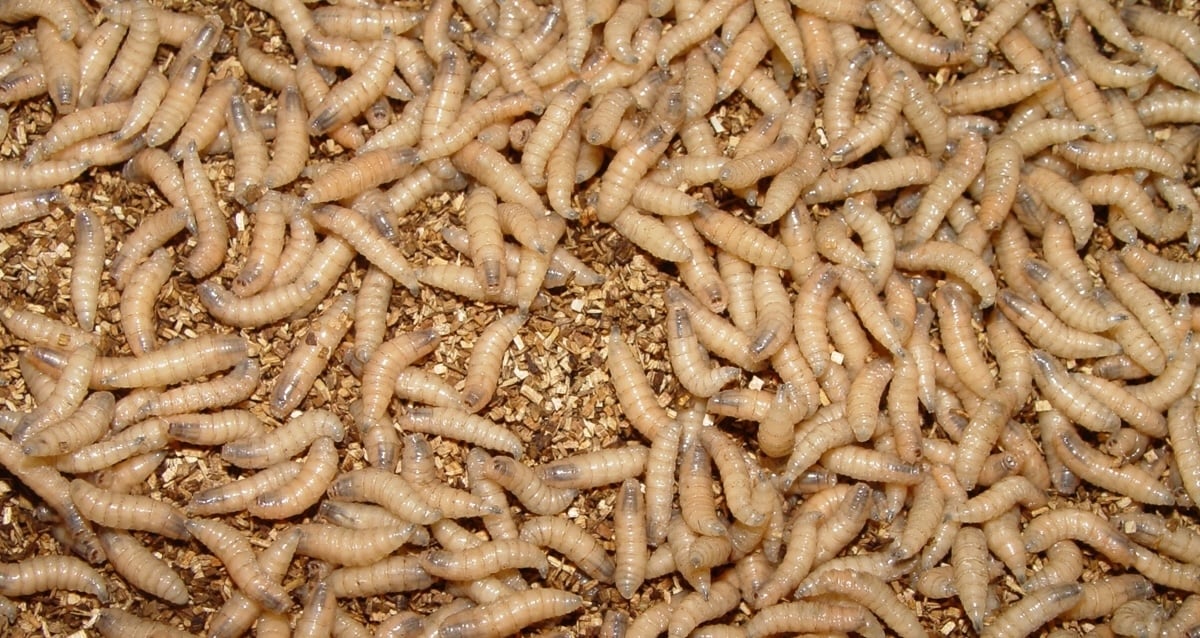
Canada announced a temporary ban on livestock from Texas due to screwworms, parasitic flies whose larvae burrow into living tissue and feed on it until the host is dead.
Hearing that an American export, especially a food product, was banned by another country while remaining available in the U.S. is certainly going to raise concerns.
So, here’s what you need to know about Canada’s temporary ban on Texas beef due to fears about parasitic screwworms.
In a viral video with more than 1.8 million views as of this writing, content creator Steffani (@ouisteffani) is basting a steak, but the text overlay reveals the upsetting truth about the American beef market at the moment.

@ouisteffani/TikTok, Sandra Seitamaa/UnsplashA woman on TikTok brought attention to Canada’s temporary ban on Texas beef due to concerns about a screwworm outbreak.
“Canada just banned all beef from Texas. Allegedly, farmers are being discouraged from reporting screwworms in cattle so they don’t lose money. There was a department in charge of making sure this didn’t happen, but DOGE cut it,” the text overlay on the video reads.
“Screwworms have the potential to jump to people, btw,” she added in the caption, stoking more fear that these parasites could be transmitted from animals to humans.
Here are the facts about screwworms and Canada’s ban on American beef.
What Is A Screwworm?
The screwworm is a parasitic fly whose larvae burrow into and feed on living tissue. If left untreated, this can kill an animal in seven to 10 days.
On June 3, 2026, the United States Department of Agriculture (USDA) confirmed the presence of a New World screwworm in a three-week-old calf in Zavala County, Texas — the first confirmed case in a U.S. livestock herd in decades.

Wikimedia CommonsUnlike other similar parasites, screwworm larvae will eat healthy issues, and not just dead or dying tissue.
By June 8, Farm Progress reported five confirmed U.S. cases, including two calves in separate Texas counties, a goat in Texas about 140 miles from the Mexican border, and a dog in New Mexico (making it the first case outside Texas). Texas Gov. Greg Abbott declared a state of emergency, so additional resources from state agencies can be used to combat the screwworm. At the national level, President Trump appointed a new senior adviser for screwworm preparedness.
Canada moved quickly in response. On June 5, the Canadian Food Inspection Agency announced a temporary ban on livestock from Texas — cattle, horses, and other warm-blooded animals — barring any that had been in the state within 21 days of crossing the border, according to the BBC.
Meanwhile, Abbott told reporters that the outbreak was “likely to spread over the course of the summer.”
Unlike what the TikTok video said, this is a livestock ban, not just a beef ban. Screwworms feed on the living tissue of many animals, not only cows. However, the USDA has said that the country’s food supply is not at risk because screwworms do not infest meat, fruits, vegetables, or other types of food.
Officials Call On Farmers To Report Cases Immediately
Texas Agriculture Commissioner Sid Miller has warned publicly that ranchers may not report suspected cases because they don’t want the government restricting cattle movement and triggering quarantines, Farm Progress reported.

Bailey Alexander/UnsplashCanada banned all Texas livestock — not just beef.
U.S. Agriculture Secretary Brooke Rollins quickly responded, calling Miller’s statement “a very unserious comment from perhaps an unserious ag commissioner with just a few months left.”
Miller, who indeed lost his primary in March and won’t be returning to office, stood his ground, saying that he heard the sentiments that he relayed from ranchers personally.
Then, Rear Adm. Michael Schmoyer, who leads the USDA’s New World Screwworm Directorate, didn’t mince words about what’s at stake when it comes to reporting cases: “You want to get this over quicker? Have people report. Ask people to report. Beg people to report. That’s what we need.”
Do DOGE-Related Budget Cuts Have Something To Do With Texas’ Screwworm Problem?
When the Department of Government Efficiency (DOGE) dismantled the U.S. Agency for International Development (USAID) in early 2025, a program dedicated to monitoring the spread of screwworms across the U.S.-Mexico border went with it.
Whether cutting that program helped cause the current outbreak is a different question. While there’s a connection, it’s hard to draw a definitive straight line.

uacescomm/FlickrAfter landing on a host, the New World screwworm fly can lay up to 300 eggs at once.
Are Screwworms A Danger To Humans?
The New World screwworm feeds on the living tissue of warm-blooded animals as well as humans, the Centers for Disease Control and Prevention (CDC) reports.
Female flies are attracted to open wounds (even a tick bite is enough) and body openings (like the eyes, ears, nose, mouth, or genitals) and can lay 200 to 300 eggs at a time. The maggots burrow in and feed on living flesh.
Symptoms can include painful skin wounds or sores that worsen within a few days, foul odor from the site of the infestation, and bleeding from open sores.
Human cases in the U.S. are rare, typically showing up in travelers returning from Central or South America, but they can happen.
What The USDA Is Doing To Fight This Outbreak

Wikimedia CommonsIf screwworm maggots are not dealt with, they can kill their host within a matter of days.
The main strategy in fighting screwworm infections is the sterile insect technique, which involves releasing millions of sterile male flies to mate with wild females until the population collapses. This is the very technique that allowed the U.S. to virtually eradicate the screwworm in the 1970s.
North America’s only sterile fly facility is in Panama and produces about 100 million flies per week. The USDA broke ground this year on a $750 million facility at Moore Air Base in South Texas, due to open in mid-2027.
All That’s Interesting reached out to @ouisteffani for comment via TikTok direct message.
For more on what screwworms actually are, read about the grossest parasites that can actually infect the human body. And if that’s not enough, here are five more parasites that are stranger than you could even imagine.