

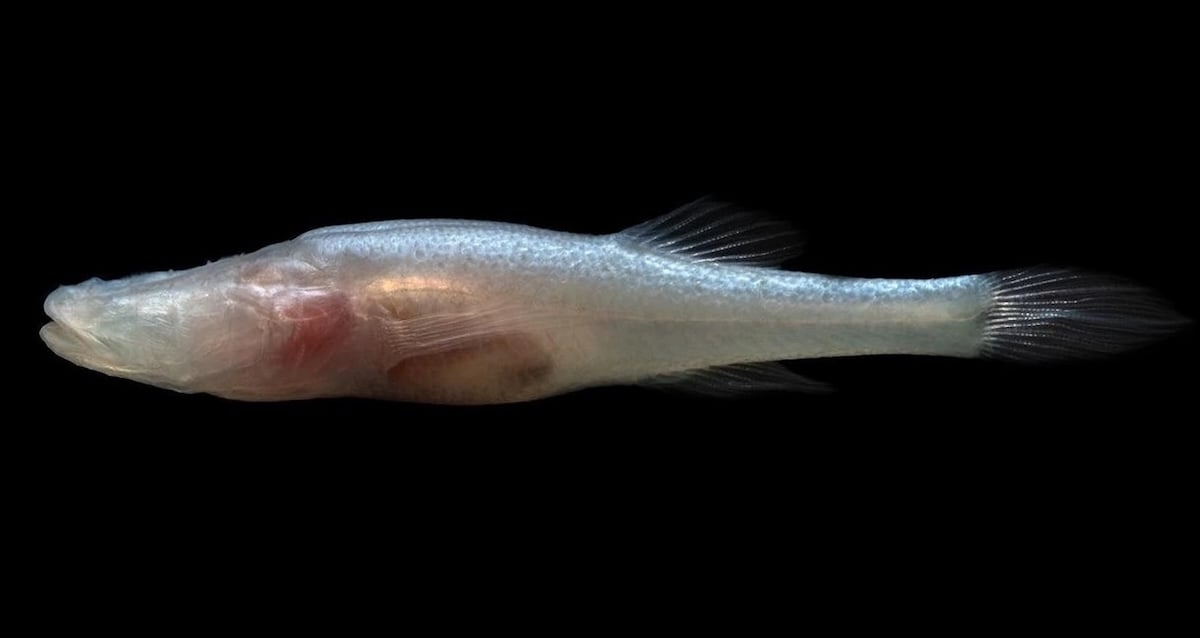
Known as the “Demon Cavefish,” this bizarre creature was officially christened Demogorgonichthys arcanus, in reference to the Demogorgon monster from Netflix’s Stranger Things.
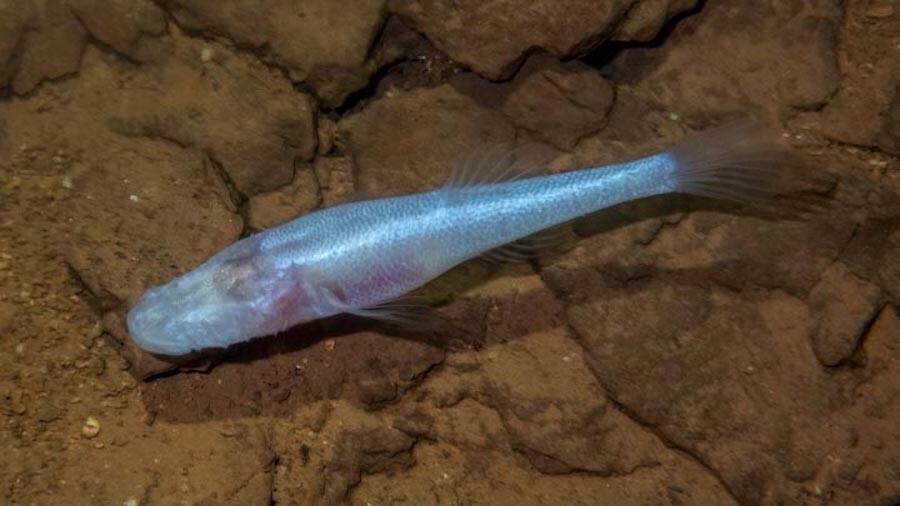
Matthew L. Niemiller/UAHResearchers have been studying Bobcat Cave for decades, but have only now discovered this new cavefish species.
Scientists have been studying Bobcat Cave in Alabama for decades, checking for both water quality and the vulnerability of its animals. The cave is part of the cavern system beneath the U.S. Army site Redstone Arsenal, which was used as a center for chemical weapons production during and just after World War II.
For years, biologists have been protecting the endangered Alabama Cave Shrimp that call Bobcat Cave home, and now, a new species in this cave has come to light, likely among the most unusual fish in the world: the Demon Cavefish.
The Demon Cavefish That Was Hiding In Plain Sight Inside Alabama’s Bobcat Cave
The director of the cave biology lab at The University of Alabama in Huntsville, Matthew Niemiller, found the cavefish by accident while conducting a routine survey of the cave’s largest chamber, the Shrimp Room, in early 2025.
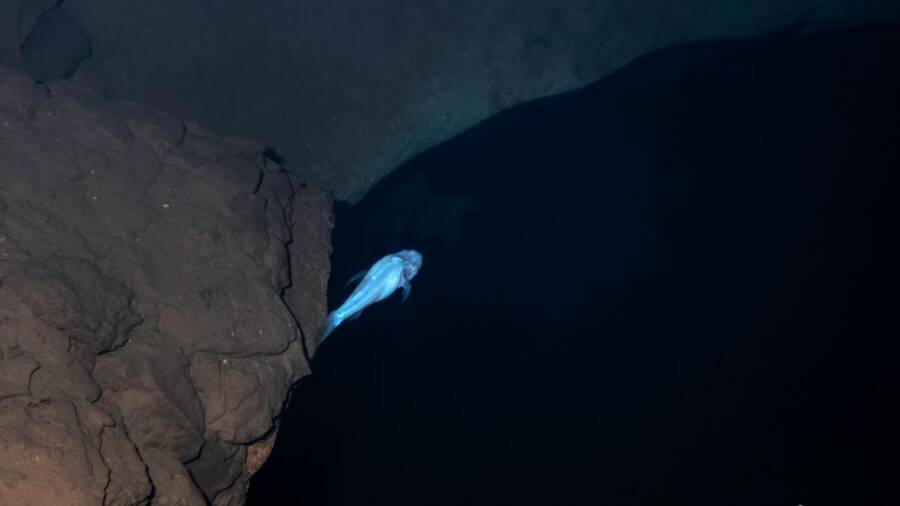
Matthew L. Niemiller/UAHThough researchers have observed this fish’s electric blue skin and even glimpsed its brain through its translucent head, they have no idea what it eats or how it reproduces.
“I slipped in the mud at the back of the Shrimp Room and fell into a deeper pool. During my graceful plummet, I disturbed a cavefish and crayfish underneath a rock ledge,” Niemiller told Live Science.
After conducting genetic analysis and closer inspection of the fish, the university’s team of biologists published their results in the journal Scientific Reports, describing their find as a “discovery in plain sight.”
Researchers named the fish Demogorgonichthys arcanus, after both the Demogorgon monster from Netflix’s Stranger Things and the mythical ancient Greek demons of the same name.
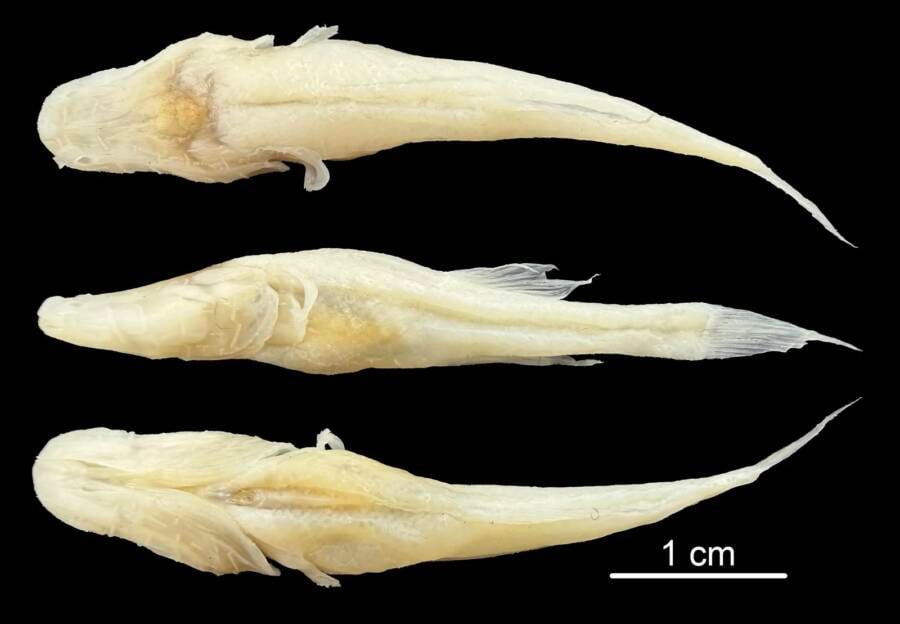
Matthew L. Niemiller/Niemiller Nature LLCThe Demon Cavefish evolved to have no eyes because its habitat consists of total darkness.
The Demon Cavefish looks different from the other variety of cavefish that had previously been found living in Bobcat Cave (Typhlichthys subterraneus). For one thing, the newly-discovered fish has translucent skin and no eyes.
“The new cavefish had a pronounced hump behind the head, a longer, flatter snout, and unbranched fin rays. We confirmed that nearly half of the cavefish we observed were this new species,” Niemiller told Live Science.
Then, the genetic analysis confirmed that the Demon Cavefish indeed did not fit genetically within any known cavefish group.
Analaysis also revealed that this species carries unique disabling mutations for rhodopsin, a light-sensitive protein that aids vision in poor light. Niemiller said that this was a great example of natural selection: because the cavefish live in total darkness, vision is unnecessary, so the fish stop maintaining that gene.
“More importantly, the specific way this fish’s rhodopsin is broken is different from how it’s broken in the related cavefish it lives alongside. That’s strong evidence they lost their vision independently,” Niemiller told Live Science.
If the two species of cavefish truly lost their vision independently, this shows how evolution causes different species to obtain the same physical characteristics based on their shared habitat.
Redstone Arsenal’s Time As A Chemical Weapons Facility
The particular habitat of Bobcat Cave is certainly relevant to this study — because its conditions have likely been affected by the U.S. Army base and weapons facility that’s been sitting right atop it for decades.

Wikimedia CommonsWorkers at Redstone Arsenal, which was used as a chemical weapons facility during World War II.
This base, Redstone Arsenal, was a production center for chemical weapons during World War II, after which large amounts of chemicals were buried at the site, including British mustard gas and nerve agents. Since then, the site has been investigated and studied due to its resulting contamination.
Researchers have found that Bobcat Cave contains higher levels of trace metals relative to other cave habitats, for instance. However, it remains unclear just how the conditions of Bobcat Cave and the effects of Redstone Arsenal may have influenced the evolution of the Demon Cavefish.

Wikimedia CommonsRedstone Arsenal has been the subject of multiple clean-up efforts since its time as a chemical weapons facility.
The Outlook For The Endangered Demogorgonichthys arcanus
The larger concern for the Demon Cavefish is that the cave’s groundwater is connected to the surface water above, which exposes the fish to runoff, sediment, and contaminants from the nearby city of Huntsville.
With this in mind, the researchers noted that the Demon Cavefish falls into the category of “critically endangered” species.
“Being known from a single cave and its aquifer makes it inherently vulnerable,” Niemiller said in a statement. “What protects [the fish] is protecting the water, including safeguarding groundwater quality and the recharge basin, not just the cave passage, along with continued monitoring that reliably tells this species apart from its look-alike neighbor.”
While the team is now focusing on determining the population size of the Demon Cavefish and how to protect this species, the discovery alone was an exciting achievement for the researchers. They never thought, after so many years studying Bobcat Cave, that they’d find something new within its confines.
As Niemiller said, “The demon cavefish is a reminder that our inventories are far from finished, even in well-explored places.”
After reading about the Demon Cavefish species found in Alabama, learn about the American Army’s Cold War facility for chemical weapons at Maryland’s Edgewood Arsenal. Then, read about how the U.S. government’s top-secret Montauk Project helped inspire Stranger Things.