

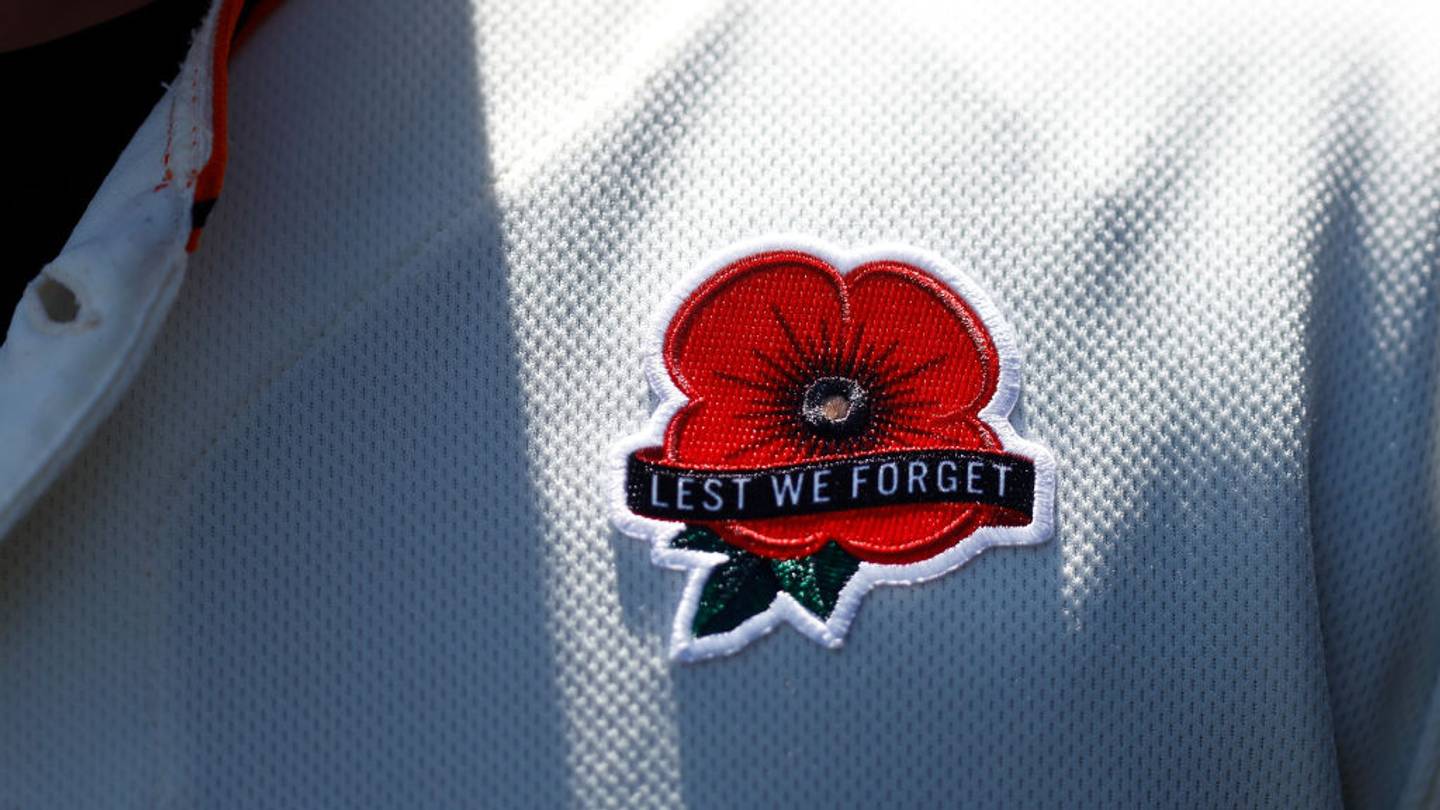
If you’ve ever seen red poppies appearing around Memorial Day and wondered about the reason why, the answer involves a moving story about poetry, respect, grief, and the resilience of humans and natural landscapes.
Poppies are typically worn near and on Memorial Day in the U.S. as part of a tradition known as Poppy Day, which is celebrated around the world in honor of veterans and fallen soldiers. In America, National Poppy Day occurs on the Friday before Memorial Day.
What Inspired Poppy Day?

The first seeds for Poppy Day were planted in a poem written by Lieutenant Colonel John McCrae, who served in World War I as a brigade-surgeon to the First Brigade of the Canadian Field Artillery. During a 1915 battle, shortly after losing a friend, McCrae noticed poppies growing on the battlefields where so much blood had been spilled.
From his station out in war-torn Belgium, McCrae commemorated the sight in the poem “In Flanders Fields,” which reads:
“In Flanders fields the poppies blow
Between the crosses, row on row,
That mark our place; and in the sky
The larks, still bravely singing, fly
Scarce heard amid the guns below.
We are the Dead. Short days ago
We lived, felt dawn, saw sunset glow,
Loved and were loved, and now we lie,
In Flanders fields.
Take up our quarrel with the foe:
To you from failing hands we throw
The torch; be yours to hold it high.
If ye break faith with us who die
We shall not sleep, though poppies grow
In Flanders fields.”
McCrae was not the only soldier to see lots of poppies on the battlefields of World War I. It turns out that the war itself caused the poppies to grow abundantly.
“Poppies provided this kind of shocking burst of plant life in very otherwise bleak landscapes on the Western Front,” historian and museum curator Laura Clouting said in a video for Britain’s Imperial War Museums.
“That really was helped along, actually, by the fact that modern weaponry, particularly artillery, basically pulverised the soil, and high explosive shells actually had quite a surprisingly generative effect,” she continued.
“They basically created the perfect conditions in which this, the red poppy, could grow. And they were everywhere. There was a huge profusion of them in the Western Front, so they would have been something that soldiers saw very commonly.” Soldiers would often pick the flowers and sometimes even sent them home.
One of these women was a University of Georgia professor named Moïna Michael, who was inspired to write a poem of her own after reading McCrae’s. She then began wearing artificial red poppies and started selling them to raise money for veterans.
The poem also inspired a French war widow named Anna Guérin to begin selling poppies in order to raise money for veterans, orphans, and the families of fallen soldiers. She also conceptualized the idea for an “Inter-Allied Poppy Day,” and helped establish Poppy Day observances internationally. Some of these occasions gave disabled veterans the chance to craft and sell paper and silk blossoms in order to generate some income.
How Is Poppy Day Celebrated Today?

Today, Poppy Day is celebrated around the world. By 1920, Guérin’s efforts led the American Legion to adopt the poppy as an official symbol of remembrance. This tradition soon made its way to the UK, New Zealand, Australia, and Canada, among others.
Today, poppies are most commonly associated with Remembrance Day, which is celebrated on November 11—Veterans Day in the U.S. According to the Royal British Legion, Remembrance Day poppies can be worn and shared to honor not only those who fought and died in wars, but anyone affected by conflict and terrorism around the world.
Meanwhile, in 1924, the American Legion started a National Poppy Program, which continues to this day and involves the making and selling of millions of paper poppies across the country, with the proceeds being donated to veterans’ hospitals, disabled veterans, and other related causes.
Over the years, poppies have found their way into many Memorial Day celebrations as well. Nearly a century later, in 2017, the Friday before Memorial Day was officially designated as National Poppy Day by the U.S. Congress.
Today, the American Legion encourages everyone to wear a red poppy on National Poppy Day as a way to commemorate and honor all those who have served the United States in times of war. They also encourage readings of “In Flanders Fields,” and making donations to organizations that support military members.
At the same time, some people have questioned whether poppies should still be worn, citing the fact that the flowers were originally symbols of peace and hope that a war like World War I would never happen again—and arguing that given the ongoing violence in the world, their meaning has been lost. Others have encouraged people to continue to wear and distribute poppies, but to reflect deeply on the violence and tragedies of war as they do so.