

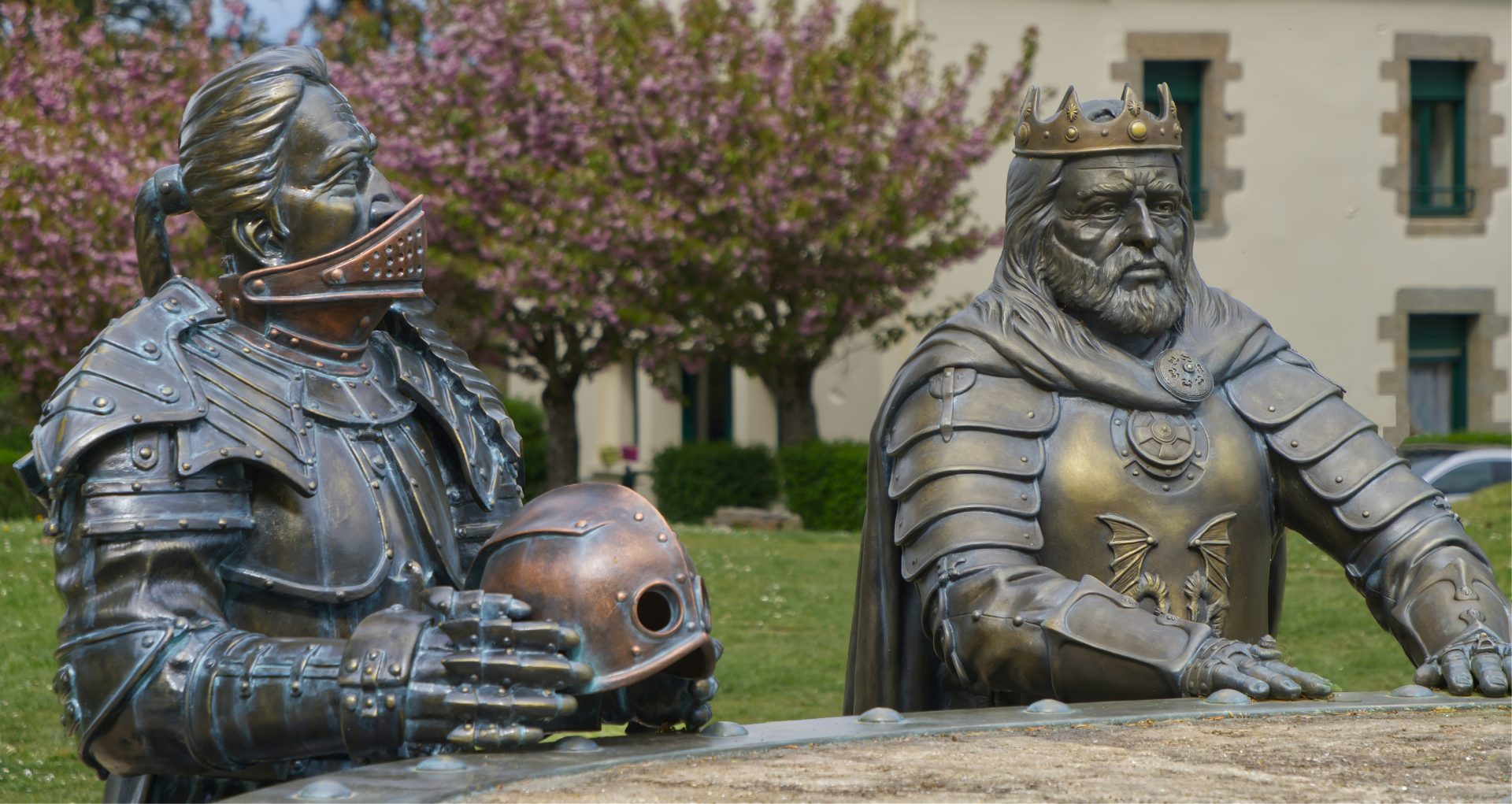
When people think about medieval kings and queens, they often imagine absolute power; rulers who could do whatever they wanted without consequences. While that image isn’t entirely wrong, it’s also not the full story. Medieval monarchs held immense authority, but their power was shaped by religion, tradition, and the nobles beneath them. In many cases, a king was powerful, but not all-powerful. In this article, we’ll break down the different kinds of power medieval monarchs had and how they used it.
They Were Seen as Chosen by God
One of the biggest sources of a monarch’s power in the Middle Ages was the belief in the Divine Right of Kings. This idea stated that kings and queens were chosen by God to rule.
Because of this, disobeying the monarch wasn’t just seen as a political crime—it was considered a sin. This gave rulers a powerful psychological advantage over their subjects. People were less likely to challenge someone they believed had divine approval.
However, this didn’t mean monarchs were completely above religious authority. The Church itself, especially institutions like the Catholic Church, could challenge or even undermine a king’s power if conflicts arose.
They Controlled Land and Wealth
In medieval society, land was everything. Wealth, status, and influence were all tied to land ownership. Monarchs technically owned all the land in their kingdom and distributed it to nobles in exchange for loyalty and service.
This system, known as Feudalism, formed the backbone of medieval politics. Kings granted land (called fiefs) to lords, who in turn provided soldiers and taxes.
Because of this, a monarch’s power often depended on how much land they controlled and how loyal their nobles were. A king with rebellious lords could quickly find himself in trouble.
They Made Laws

Medieval monarchs had the authority to create and enforce laws within their kingdoms. They could issue decrees, settle disputes, and punish criminals.
However, their power wasn’t always absolute. In places like England, documents such as the Magna Carta limited the king’s authority. This charter forced the monarch to consult with nobles and respect certain legal rights.
In other regions, councils made up of nobles or clergy also played a role in decision-making. So while kings had significant legal power, they often had to balance it with political realities.
They Led Armies into Battles

A medieval king was not just a ruler—he was also a military leader. Monarchs were expected to lead their armies into battle and defend their kingdoms from enemies.
War was a major part of medieval life, and a king’s success on the battlefield could determine his reputation and stability. Victorious rulers gained land, wealth, and loyalty, while defeated ones risked rebellion or overthrow.
Some monarchs, like Richard the Lionheart, became legendary for their military exploits. Others lost power because of poor leadership in war.
They Controlled Taxes and Resources
Monarchs had the authority to collect taxes from their subjects. These taxes funded the kingdom’s operations, including wars, infrastructure, and royal expenses.
However, collecting taxes wasn’t always easy. Kings often relied on local lords to gather taxes on their behalf. This meant that some of the wealth never made it to the crown.
In times of financial trouble, monarchs sometimes imposed heavy taxes, which could lead to unrest or even rebellion among the population.
They Influenced Religion
Religion played a massive role in medieval life, and monarchs often had close ties to religious institutions. Kings could appoint bishops, support monasteries, and influence religious policies.
However, they didn’t have complete control over religion. The Catholic Church was incredibly powerful and could challenge a monarch’s authority.
One famous example is Henry II of England, who clashed with Thomas Becket. The conflict ended with Becket’s murder, causing outrage and forcing Henry to do public penance.
This shows that even kings had limits when it came to religious power.
They Could Grant Titles and Honors
Another important power medieval monarchs had was the ability to grant titles, lands, and honors. Becoming a lord, knight, or noble often depended on the king’s favor.
This allowed monarchs to reward loyalty and strengthen alliances. By promoting supporters, they could build a network of individuals who depended on them for status and wealth.
However, this system could also backfire. Giving too much power to certain nobles sometimes created rivals who could challenge the throne.
They Acted as Judges
In many cases, the king was the highest judge in the land. People could appeal directly to the monarch for justice, especially in important or complicated cases.
Royal courts handled disputes involving land, crime, and political issues. The king’s word was often final, making this one of the most direct forms of power a monarch had.
That said, local courts and officials handled most everyday cases, meaning the king’s judicial role was usually reserved for major matters.
Their Power Depended on Personality
Not all monarchs were equally powerful. A strong, intelligent ruler could dominate their kingdom and keep nobles in line. A weak or inexperienced monarch, on the other hand, might struggle to maintain control.
For example, King John of England is often remembered as a weak ruler whose failures led to the signing of the Magna Carta.
This highlights an important point: medieval monarchy wasn’t just about the title—it was also about the individual wearing the crown.
They Faced Constant Threats
Despite their power, medieval monarchs lived under constant threat. Rival nobles, foreign enemies, and even family members could challenge their rule.
Assassinations, coups, and rebellions were not uncommon. A king’s position was never entirely secure, no matter how powerful he seemed.
This constant danger meant that monarchs had to be politically savvy, forming alliances and managing relationships carefully.